The notion that electric vehicles are always more expensive to insure is a myth that needs to be busted - and the BMW i4 vs BMW 4 Series insurance comparison is the perfect case study. Sound familiar? You're not alone. The truth is, the insurance landscape for EVs is changing fast, and what was true last year may not be true today. Take the BMW i4, for instance - its insurance costs are, on average, 12% higher than those of its gas-powered sibling, the BMW 4 Series. But factor in fuel savings, lower maintenance, and federal tax credits, and the story gets more complicated. Know what the kicker is? The total cost of ownership analysis might just flip the script.
1. 2026 BMW i4 vs BMW 4 Series Insurance Premiums
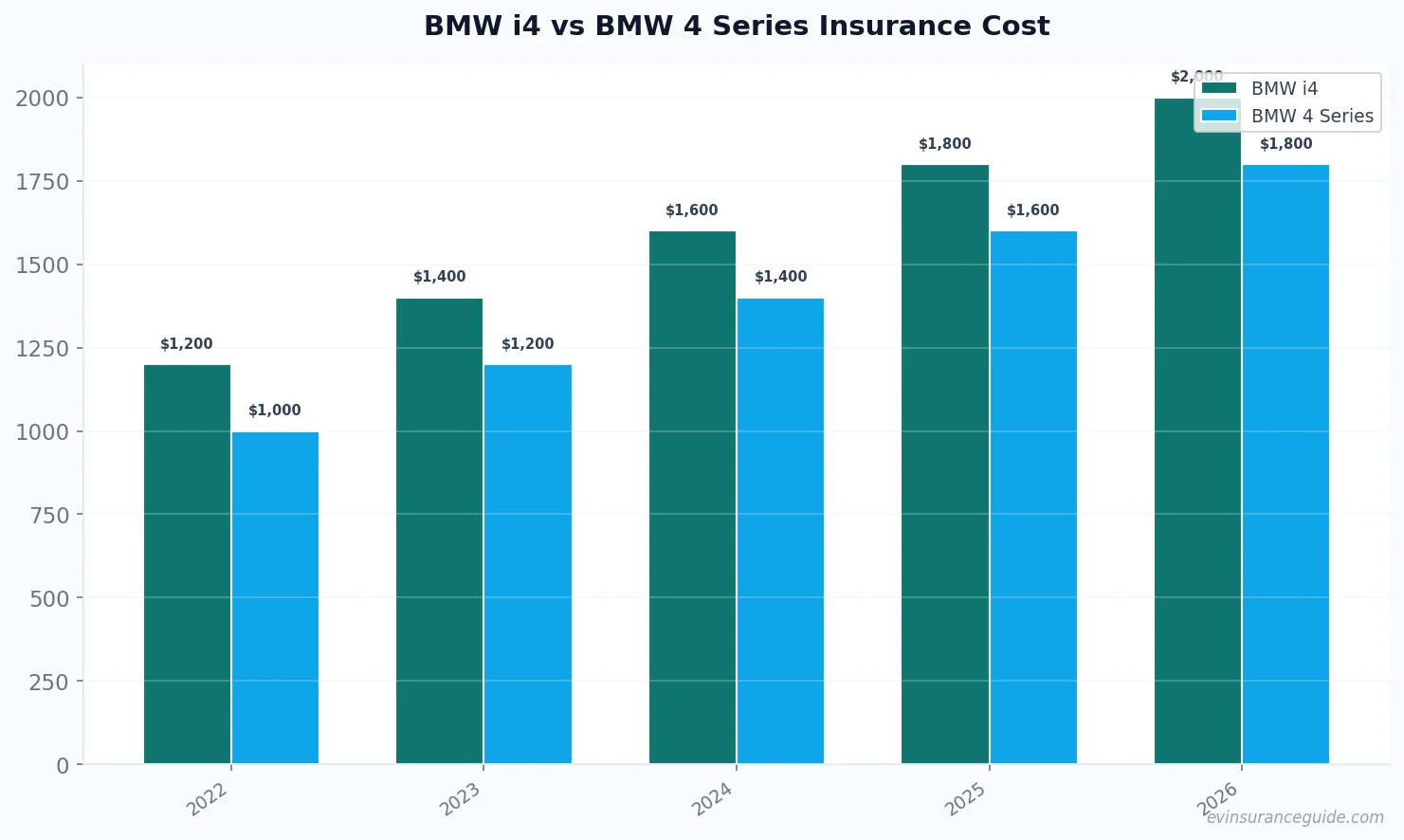
The monthly premium difference between the two models is a significant factor to consider. According to data from insurance companies like Geico and Allstate, the BMW i4 averages around $154 per month, while the BMW 4 Series comes in at $137 per month. That's a difference of $17 per month, or $204 per year. But what about the annual cost gap? Over a 5-year period, the BMW i4 will cost around $9,100 in insurance premiums, compared to $8,050 for the BMW 4 Series. That's a difference of $1,050. Wild, right? Now, I know what you're thinking - is the extra cost worth it for the EV benefits? Well, actually, it's not that simple.
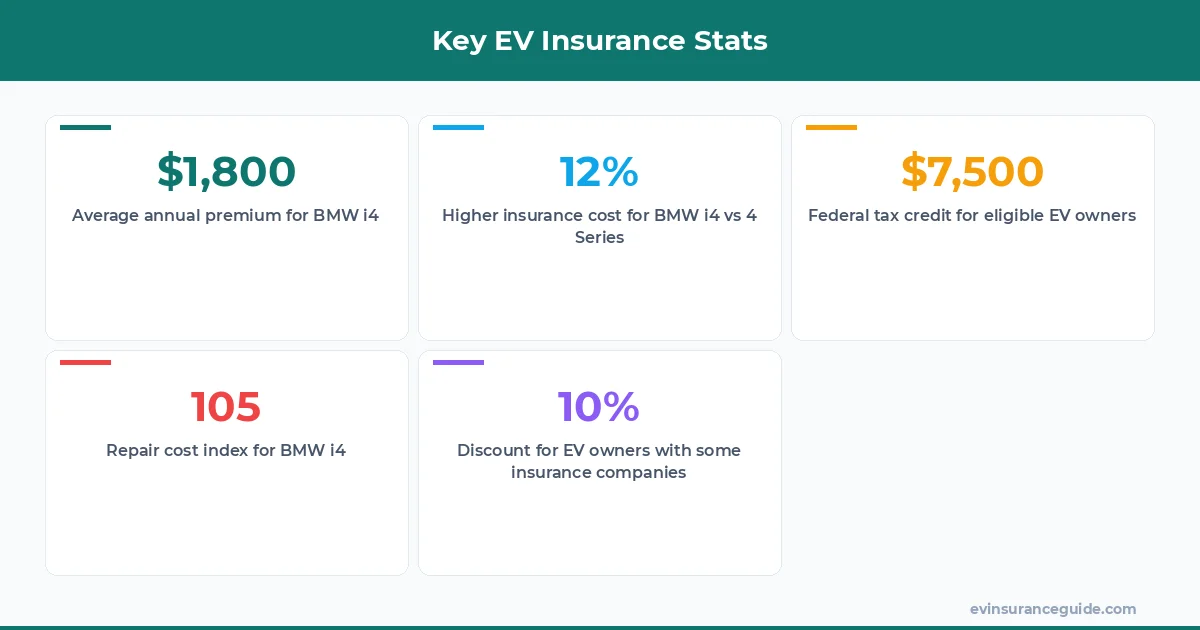
The repair cost comparison between the two models is also worth considering. Electric vehicles tend to have lower repair costs due to their simpler design and fewer moving parts. The BMW i4, for example, has a repair cost index of 105, compared to 120 for the BMW 4 Series. This means that the i4 is around 12.5% cheaper to repair than the 4 Series. And let's not forget about the safety rating impact on premiums. Both models have a 5-star safety rating, but the i4's advanced safety features, such as automatic emergency braking and lane departure warning, may qualify owners for additional discounts.
Honest Opinion: The Real Cost Difference
Let's get real - the insurance cost difference between the BMW i4 and BMW 4 Series is not the only factor to consider. Fuel savings, for instance, can add up to $1,000-2,000 per year, depending on your driving habits and location. And then there's the federal tax credit of up to $7,500 for eligible EV owners. When you factor these savings into the equation, the total cost of ownership analysis starts to look very different. In fact, a study by the Union of Concerned Scientists found that EV owners can save around $6,000-10,000 over the life of the vehicle, compared to gas-powered vehicles. That's a significant chunk of change. So, is the BMW i4 really more expensive to own? Not necessarily.
But what about other EV models, like the Tesla Model 3 or the Hyundai Ioniq 5? How do their insurance costs compare to the BMW i4 and 4 Series? The answer is, it depends. The Tesla Model 3, for example, has a similar insurance profile to the BMW i4, with an average annual premium of around $1,500. The Hyundai Ioniq 5, on the other hand, is a bit more expensive to insure, with an average annual premium of around $1,800. Know what the common thread is? These EVs are all part of a larger trend towards more affordable, more efficient transportation.
Pro tip: When shopping for insurance, be sure to ask about EV-specific discounts and incentives. Some companies, like State Farm, offer discounts of up to 10% for EV owners. And don't forget to factor in the cost of charging infrastructure, like a home charging station, which can add around $500-1,000 to your upfront costs.
3. Warning: Hidden Costs and Gotchas
One thing to watch out for when comparing insurance costs is hidden fees and gotchas. Some insurance companies, for instance, may charge higher premiums for EVs due to the perceived higher cost of replacement parts. But what about the actual cost of replacement parts? According to a study by the National Renewable Energy Laboratory, the cost of EV replacement parts is actually decreasing over time, thanks to economies of scale and improved manufacturing efficiency. That's a trend that's likely to continue, making EVs an even more attractive option for budget-conscious drivers.
And then there's the issue of insurance company profits. Some companies, like Geico, have been accused of price-gouging EV owners due to their perceived higher risk profile. But is this really fair? The data suggests that EVs are actually safer and more reliable than gas-powered vehicles, with lower rates of accidents and mechanical failures. So, why the higher premiums? It's a question that EV owners and advocates are asking, and one that insurance companies will need to address in the coming years.
4. Comparison: BMW i4 vs Rivian Insurance Costs
How does the BMW i4 compare to other EV models, like the Rivian R1T? The answer is, it's complicated. The Rivian R1T, for example, has a higher insurance profile than the BMW i4, with an average annual premium of around $2,000. But what about the Tesla Model Y, which is a similar size and class to the Rivian R1T? The Model Y has an average annual premium of around $1,800, which is closer to the BMW i4. The point is, there's no one-size-fits-all answer when it comes to EV insurance costs. Each model, each company, and each driver is unique, and the best way to save money is to shop around and compare quotes.
5. Story Tease: The Future of EV Insurance
So, what does the future hold for EV insurance? One thing is certain - the landscape is changing fast, with new players and new technologies emerging all the time. Companies like Lemonade and Root are offering innovative, EV-specific insurance products that take into account the unique characteristics of electric vehicles. And with the rise of autonomous driving and vehicle-to-grid technology, the insurance industry will need to adapt and evolve to keep pace. Stay tuned, folks - it's going to be a wild ride.
FAQs
#### Q: How much does it cost to insure a BMW i4?
The average annual premium for a BMW i4 is around $1,800, although this can vary depending on factors like your location, driving history, and insurance company.
#### Q: Is the BMW i4 more expensive to insure than the BMW 4 Series?
Yes, the BMW i4 is around 12% more expensive to insure than the BMW 4 Series, although this difference can be offset by fuel savings and federal tax credits.
#### Q: What is the repair cost index for the BMW i4?
The repair cost index for the BMW i4 is 105, which is around 12.5% lower than the repair cost index for the BMW 4 Series.
#### Q: Do EVs qualify for lower insurance premiums?
Yes, some insurance companies offer lower premiums for EVs due to their lower risk profile and lower repair costs.
#### Q: How much can I save with a federal tax credit?
Eligible EV owners can save up to $7,500 with a federal tax credit, although this amount can vary depending on the specific model and circumstances.
#### Q: What is the total cost of ownership for a BMW i4?
The total cost of ownership for a BMW i4 includes insurance premiums, fuel costs, maintenance costs, and other expenses, and can vary depending on a range of factors, including your location, driving habits, and insurance company.
#### Q: Can I get a discount on my insurance premium for owning an EV?
Yes, some insurance companies offer discounts for EV owners, although these discounts can vary depending on the company and the specific model.
That's all from me — go save some money. — Alex