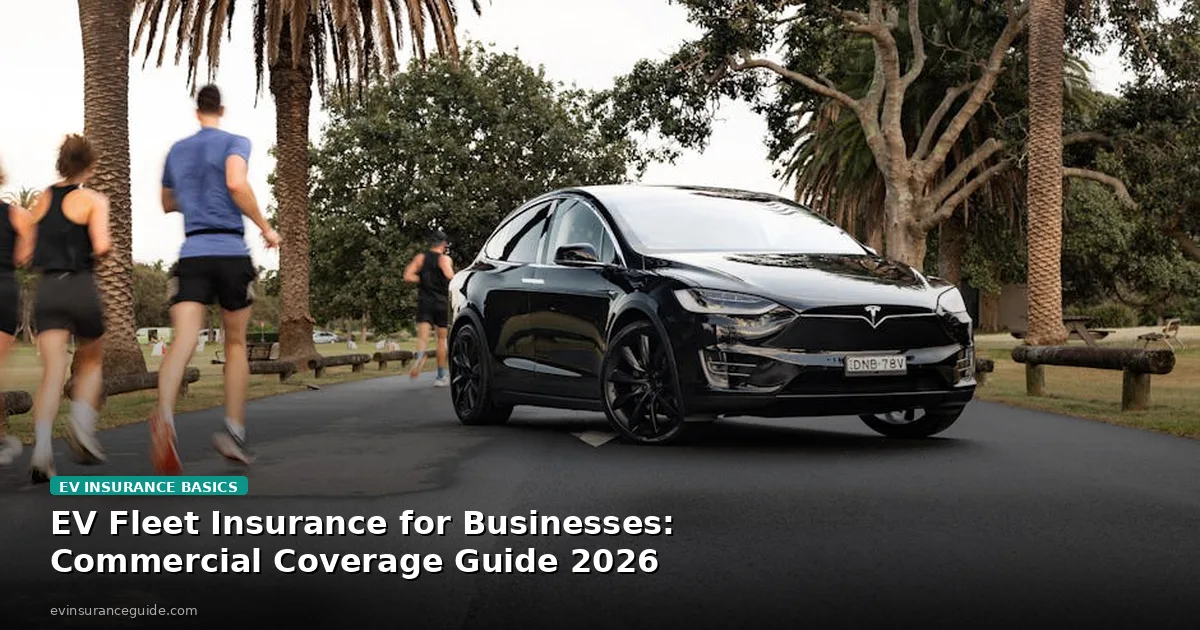
Running a commercial fleet of electric vehicles changes the insurance equation entirely. Fleet policies for EVs don't work the same way as insuring a handful of gas-powered company cars, and the pricing reflects that reality. The average commercial EV fleet policy runs $2,800 to $6,500 per vehicle per year depending on the vehicles, driver profiles, and coverage limits.
Why EV Fleet Insurance Costs More Than Traditional Fleet Coverage
The gap between gas fleet and EV fleet insurance premiums sits around 15-25% higher for electric vehicles. Three factors drive this difference. First, replacement parts for EVs cost significantly more — a battery pack replacement on a Tesla Model 3 can run $15,000-$20,000. Second, fewer body shops are certified to work on high-voltage electric systems, which inflates labor costs. Third, commercial EVs like the Ford E-Transit or Rivian Commercial Van are newer to the market, meaning insurers have less claims data to work with.
That said, fleet operators switching to EVs often offset higher premiums through fuel savings of $3,000-$5,000 per vehicle annually and reduced maintenance costs. Progressive Commercial and Nationwide both report that total cost of ownership for EV fleets breaks even with gas fleets within 18-24 months when factoring in insurance, fuel, and maintenance together.
Best Commercial EV Fleet Insurance Providers
Progressive Commercial leads the market for fleets under 50 vehicles. Their SmartHaul and BusinessAuto programs both cover EVs with no surcharge for electric drivetrains. Fleet discounts start at 5 vehicles and scale up to 20% off per-vehicle rates at 25+ units.
Nationwide Commercial offers dedicated EV fleet endorsements that include battery degradation coverage and charging infrastructure liability — two things most standard fleet policies miss entirely. Their pricing for a 10-vehicle fleet of Chevrolet Equinox EVs averages $3,200 per vehicle annually.
Zurich Commercial and Liberty Mutual Commercial both handle large fleets (100+ vehicles) and offer custom EV fleet programs with telematics integration. Zurich's program specifically covers vehicles during DC fast charging, which is a gap in many standard policies.
Specialty insurers like Fleet Response and Motus also handle EV-specific fleet needs, particularly for last-mile delivery operations using vans like the BrightDrop Zevo or Mercedes eSprinter.
What Commercial EV Fleet Insurance Should Cover
A solid commercial EV fleet policy needs more than basic liability and collision. Here's what fleet managers should demand:
- Battery pack coverage — Full replacement or repair coverage for lithium-ion battery packs, including damage from thermal events
- Charging infrastructure liability — Coverage for company-owned charging stations, including third-party injury or property damage from charger malfunctions
- Downtime coverage — EV repairs take 25-40% longer than gas vehicle repairs due to parts availability; business interruption coverage compensates for lost revenue
- Hired and non-owned auto — Covers employee-driven EVs used for business purposes, including personal EVs used for work
- Cargo coverage — Essential for delivery fleets; covers goods in transit
- Cyber liability — Connected EVs with fleet management software create data breach exposure
Fleet Manager Tip: Request a policy that explicitly names "electric vehicle battery pack" as covered property. Many standard commercial auto policies have ambiguous language that insurers can use to deny battery claims.
How to Reduce Commercial EV Fleet Insurance Premiums
Fleet telematics can cut premiums by 10-20%. Insurers like Progressive and Samsara partner to offer usage-based fleet pricing where safe driving data directly reduces rates. GPS tracking, speed monitoring, and harsh-braking alerts all factor into the discount calculation.
Driver training programs specifically for EV operation can earn an additional 5-8% discount. Programs from the National Safety Council and Smith System both offer EV-specific modules that qualifying insurers recognize.
Higher deductibles on comprehensive coverage make sense for fleets with capital reserves. Moving from a $500 to $2,500 deductible per vehicle can reduce annual premiums by 12-18% across the fleet.
Bundling fleet auto with general liability, property, and workers' comp through one carrier typically saves 15-25% versus purchasing each policy separately.
EV Fleet Insurance vs. Individual EV Policies: Cost Comparison
| Coverage Type | Per-Vehicle Fleet Rate | Individual Policy Rate |
|---|---|---|
| Liability (1M/2M) | $1,200-$1,800 | $1,400-$2,200 |
| Collision | $800-$1,500 | $900-$1,800 |
| Comprehensive | $400-$800 | $500-$1,000 |
| Total Annual | $2,800-$6,500 | $3,500-$7,500 |
Fleet policies save 15-30% per vehicle compared to individual commercial policies. The savings increase with fleet size — a 50-vehicle fleet typically sees 25-30% savings versus individual policies.
FAQs About Commercial EV Fleet Insurance
How many vehicles qualify as a fleet for insurance purposes?
Most commercial insurers define a fleet as 5 or more vehicles. Some start fleet pricing at just 3 vehicles. Progressive Commercial begins fleet discounts at 5 units, while Nationwide starts at 3.
Does fleet EV insurance cover charging at public stations?
Standard fleet policies cover the vehicle itself regardless of where it charges. However, liability for incidents at public charging stations (like a cable causing a trip hazard) may require a separate commercial general liability endorsement.
Are electric delivery vans more expensive to insure than gas vans?
Yes, typically 18-22% more. A Ford E-Transit fleet policy averages $3,800 per vehicle annually versus $3,100 for a gas Transit. The gap narrows as more repair shops become EV-certified.
Can we insure a mixed fleet of EVs and gas vehicles on one policy?
Absolutely. Most commercial fleet insurers handle mixed fleets on a single policy with per-vehicle pricing. This is actually the most common setup as companies transition gradually to electric.
Does telematics reduce EV fleet insurance rates?
Yes, significantly. Fleet telematics programs from Samsara, Geotab, or Verizon Connect can reduce premiums by 10-20% when integrated with insurer programs. Data on driving patterns, charging behavior, and vehicle diagnostics all factor into rate calculations.
What happens if an EV battery fire damages other fleet vehicles?
A properly structured fleet policy covers fire damage across all affected vehicles under the comprehensive portion. Battery thermal events are treated the same as engine fires in gas vehicles. However, cleanup costs for lithium-ion fires can be substantial — ensure your policy has adequate pollution liability coverage.
EV fleet insurance is evolving rapidly as more businesses electrify their vehicles. The carriers offering the best rates today are those investing in EV-specific claims expertise and repair networks. Get quotes from at least three commercial insurers, and make sure battery coverage and charging infrastructure liability are explicitly included in any policy you sign.