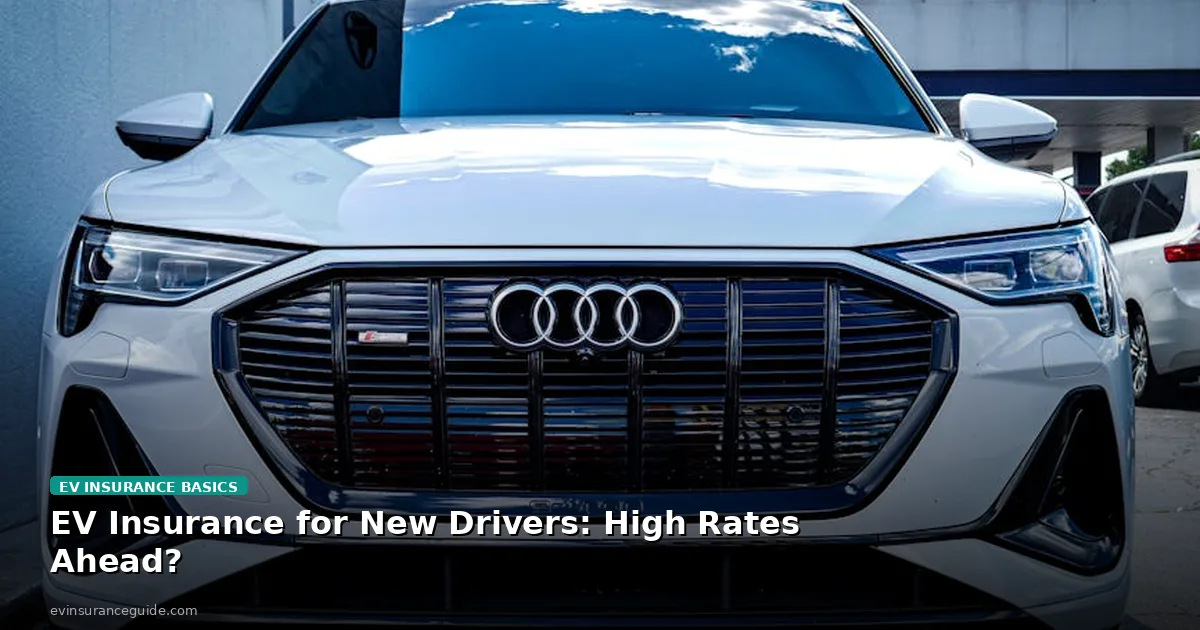
New drivers, regardless of age, are getting slammed with EV insurance rates that are 30-50% higher than their experienced counterparts - that's a pretty harsh welcome to the world of electric vehicles. Know what the kicker is? These high rates can stick around for years, making it tough for new drivers to afford the EV of their dreams. Sound familiar? You're not alone.
A Story of High Rates and Frustration
I've seen it time and time again - new drivers, excited to get behind the wheel of their first EV, only to be hit with insurance quotes that are through the roof. Take my friend, Rachel, who just got her license and was looking to insure her brand new Nissan Leaf. She was quoted over $350/month by a big-name insurer - ouch. That's when she started shopping around and found a better deal with a smaller company, but it was still a pricey $280/month. Wild, right? The difference in rates can be staggering.
But here's the thing: it doesn't have to be this way. There are ways for new drivers to get affordable EV insurance, and it starts with choosing the right vehicle. The Nissan Leaf, Mini Cooper SE, and VW ID.4 are all great options for new drivers, with relatively low insurance costs. For example, a new driver in California can expect to pay around $220/month for a Leaf, while a Tesla Model 3 would cost closer to $300/month. That's a big difference, especially for someone on a tight budget.
And then there's the issue of building insurance history. New drivers don't have any, which makes them a higher risk in the eyes of insurers. But, by taking a defensive driving course or installing a telematics device in their vehicle, new drivers can start to build a positive insurance history and lower their rates. It's not a quick fix, but it's a start.
The Honest Truth About EV Insurance for New Drivers
Let's get real - EV insurance for new drivers is expensive, and it's not just because of the vehicle itself. It's because new drivers are more likely to be involved in an accident, and that costs insurers money. But, that doesn't mean new drivers should be priced out of the market. There are companies, like GEICO and Progressive, that offer more competitive rates for new drivers. For instance, a 25-year-old new driver in New York can get a quote of around $250/month from GEICO for a Hyundai Ioniq 5, while a more experienced driver would pay around $180/month. That's still a big difference, but it's a start.
And, if you're a new driver, you might be wondering - should I get my own policy or stay on my parent's? Well, actually, it depends on the situation. If you're still living with your parents, it might be cheaper to stay on their policy, especially if they have a good driving record. But, if you're living on your own, it's probably better to get your own policy. The math can be complicated, but it's worth doing the research. For example, a parent's policy with State Farm might cost around $150/month for a BMW iX, while a separate policy for a new driver would cost around $280/month.
One way to lower your rates, no matter what, is to take advantage of good student discounts. If you're a full-time student with a B average or better, you can qualify for discounts of up to 25% off your premium. That's a big deal, especially for new drivers who are already paying a premium for their insurance. And, some companies, like Allstate, offer discounts for students who complete a driver's education course.


A Surprising Comparison: EVs vs Gas Guzzlers
You might think that EVs are always more expensive to insure than gas-powered vehicles, but that's not always the case. In fact, some EVs, like the Nissan Leaf, can be cheaper to insure than their gas-powered counterparts. For instance, a new driver in Texas can expect to pay around $200/month for a Leaf, while a similar gas-powered vehicle, like a Honda Civic, would cost around $220/month. That's a surprise, right?
But, what about the more expensive EVs, like the Tesla Model S or the Rivian R1T? Well, those vehicles are a different story. They're luxury vehicles, and they come with luxury prices - both for the vehicle itself and for the insurance. A new driver looking to insure a Tesla Model S can expect to pay upwards of $400/month, while a Rivian R1T would cost around $350/month. That's a big chunk of change, especially for someone who's just starting out.
And, if you're wondering, the cost of insurance isn't the only factor to consider when choosing an EV. You've also got to think about the cost of the vehicle itself, as well as any additional features or upgrades you might want. For example, a Tesla Model 3 with all the bells and whistles can cost upwards of $60,000, while a more basic model can be had for around $40,000. That's a big difference, and it's something to consider when you're budgeting for your new vehicle.
A Warning: Don't Get Caught in the Trap of High Rates
One thing to watch out for when shopping for EV insurance is the trap of high rates. Some companies will quote you a low rate upfront, only to raise it after a few months. That's not cool, and it's something to be aware of. For example, I've seen companies like Liberty Mutual quote a new driver $250/month, only to raise it to $300/month after six months. That's a big increase, and it's not something you want to deal with.
So, how can you avoid this trap? Well, one way is to read the fine print and make sure you understand what you're getting into. Don't be afraid to ask questions, and don't be swayed by low upfront rates. It's better to pay a bit more upfront and know what you're getting than to get caught in a trap of high rates. And, if you do find yourself in a situation where your rates are raised, don't be afraid to shop around and look for a better deal.
Pro tip: always get multiple quotes before signing up for an insurance policy. It's the best way to ensure you're getting the best rate, and it's something that can save you a lot of money in the long run.
Busting the Myth of Unaffordable EV Insurance
There's a myth out there that EV insurance is unaffordable, especially for new drivers. But, that's just not true. While it's true that EV insurance can be more expensive than insurance for gas-powered vehicles, there are ways to make it more affordable. For example, many companies offer discounts for things like good grades, military service, or even just for being a safe driver. And, by shopping around and comparing rates, you can find a policy that fits your budget.
For instance, a new driver in Illinois can get a quote of around $220/month from USAA for a Hyundai Kona Electric, while a similar policy from a different company might cost $280/month. That's a big difference, and it's something to consider when you're shopping for insurance. And, if you're a student, you might be able to qualify for a good student discount, which can save you even more money.
So, what's the bottom line? EV insurance for new drivers might be more expensive than insurance for gas-powered vehicles, but it's not unaffordable. By doing your research, shopping around, and taking advantage of discounts, you can find a policy that fits your budget and gets you on the road in your new EV.
FAQs
#### What is the average cost of EV insurance for new drivers?
The average cost of EV insurance for new drivers can vary widely depending on the vehicle, location, and other factors. However, on average, new drivers can expect to pay around $250-300/month for a basic policy.
#### How can I lower my EV insurance rates as a new driver?
There are several ways to lower your EV insurance rates as a new driver, including taking a defensive driving course, installing a telematics device in your vehicle, and qualifying for good student discounts. You can also shop around and compare rates to find the best deal.
#### What are the best EVs for new drivers to insure?
Some of the best EVs for new drivers to insure include the Nissan Leaf, Mini Cooper SE, and VW ID.4. These vehicles tend to have lower insurance costs than other EVs, making them a great option for new drivers.
#### Can I stay on my parent's insurance policy as a new driver?
It depends on the situation. If you're still living with your parents, it might be cheaper to stay on their policy. However, if you're living on your own, it's probably better to get your own policy. The math can be complicated, but it's worth doing the research.
#### How can I get a good student discount on my EV insurance?
To qualify for a good student discount, you'll typically need to be a full-time student with a B average or better. You'll also need to provide proof of your grades to your insurance company. The discount can vary depending on the company, but it's usually around 10-25% off your premium.
#### Are there any specific insurance companies that offer discounts for new drivers?
Yes, there are several insurance companies that offer discounts for new drivers, including GEICO, Progressive, and Allstate. These companies often offer competitive rates and discounts for things like good grades, military service, or safe driving.
#### Can I use a telematics device to lower my EV insurance rates?
Yes, many insurance companies offer discounts for drivers who use telematics devices. These devices track your driving habits and can help you qualify for lower rates if you're a safe driver. The discount can vary depending on the company, but it's usually around 10-20% off your premium.
And, finally, don't forget to shop around and compare rates. It's the best way to ensure you're getting the best deal on your EV insurance.
Go get yourself a better quote. You deserve it. — Alex