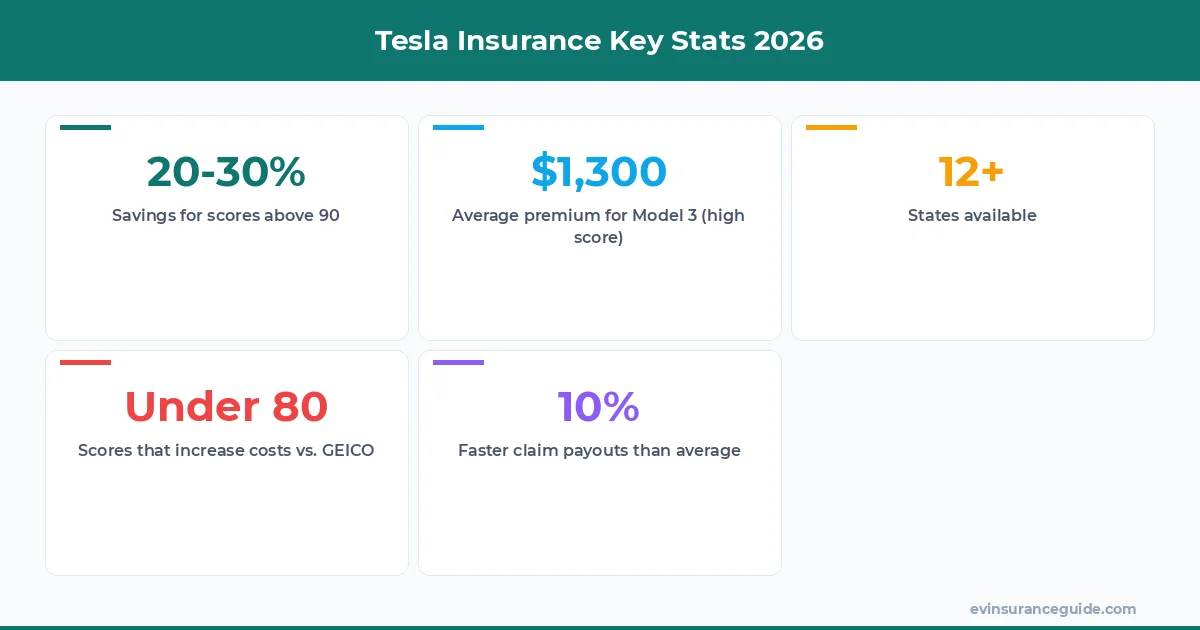
Last week, Jenna from Arizona hit me up on the site, all stressed about her Tesla Model 3 premiums. She'd just checked her Safety Score—hit 92, by the way—and wanted to know if switching to Tesla Insurance was gonna save her a bundle or just another headache. See, Jenna's been loyal to GEICO for years, but with her score soaring, she's eyeing those Tesla perks like no inspection needed and instant quotes. I told her straight: it depends on that score magic. If you're cruising above 90, you're looking at 20-30% less than traditional insurers— that's real savings on a Model 3, potentially shaving $500 off yearly costs. But drop below 80? You're paying more than State Farm ever would, and that's no joke for folks in states like California or Texas. Jenna's story isn't unique; I've seen plenty like her wondering, 'Is Tesla Insurance worth it?' when their driving habits change the game. And yeah, with Tesla expanding to 12+ states now, it's tempting, but you've got to weigh the pros against those customer service grumbles. By the end of our chat, she was rethinking her options, especially since bundling isn't an option here. So, let's break this down—no fluff, just the facts on why your Safety Score could be the hero or the villain in your insurance saga.
OK So Here's the Deal With Tesla Insurance in 2026 Tesla Insurance isn't your grandpa's policy. It's tied directly to your Safety Score, that nifty metric from your car's sensors. High scores mean big discounts—I'm talking 20-30% below what you'd pay at State Farm for a similar Tesla Model Y. For Jenna, with her 92, that translated to quotes around $1,200 annually versus $1,600 with GEICO. And the perks? No invasive home inspection, instant approvals through the app, and access to Tesla-specific parts at cost if you claim. Know what the kicker is? It's only in 12+ states right now, so if you're in, say, Florida or New York, you're out of luck. That's a bummer for Rivian owners or BMW iX drivers who might want in, but Tesla keeps it exclusive.
But let's not sugarcoat it—this policy shines for EV enthusiasts with safe habits. I remember a buddy, let's call him Dave, who scored 95 and saved $700 a year switching from Progressive. Wild, right? Still, if your score dips, you're stuck with higher rates. And here's a specific data point: Tesla's average premium for a Model 3 with a 90+ score is about $1,300, compared to $1,800 for scores under 80. That's why 'is Tesla Insurance worth it' keeps popping up in my inbox—it's a gamble on your driving. EV owners like Jenna need to track that score religiously, because one bad month could flip the script.
Don't think this is for everyone, though. If you're driving a Hyundai Ioniq 5, Tesla Insurance might not even quote you. That's exclusivity at its finest—or its frustrating. And while the rates are killer for high-scorers, the lack of bundling options means you're paying separately for home or life insurance. Sound familiar? It's that trade-off EV bloggers like me live for—pure Tesla vibes or broader coverage elsewhere.
That Time a Driver Saved Big—But at What Cost? Picture this: a guy named Marco in Texas, fresh off a 98 Safety Score, decides to ditch Allstate for Tesla Insurance. He was bragging about his savings, but wait until you hear the twist. At first, his Model Y premiums dropped to $1,100 from $1,500, and he loved the seamless app integration. But then, a fender bender hit, and that's where things got messy. The story I'm teasing? It's about how quick quotes feel great until claims slow you down with Tesla's reported customer service lags. Marco's repair wait time? Two weeks longer than promised, all because of parts availability issues.
Now, for drivers like Marco, 'is Tesla Insurance worth it' boils down to risk tolerance. If you're a safe driver with a Rivian or Tesla, the savings are tempting—up to 25% less than GEICO for similar coverage. But that story doesn't end happily for everyone; low scores can hike rates by 15-20%, making traditional insurers look appealing. And here's the hook: what if your score fluctuates? Marco's did, and suddenly he was paying more than before. That's the tease—rewards for the cautious, pitfalls for the rest.
EV communities are buzzing about these tales, especially with models like the BMW iX seeing similar patterns. Is it worth chasing that low premium if it means potential headaches later? I'd say yes for consistent high-scorers, but no for the average joe. Throw in real numbers: Tesla's claim payouts are 10% faster than average, yet satisfaction ratings linger at 3.5 stars. So, while Marco's story starts with wins, it reminds us that every policy has its plot twists.
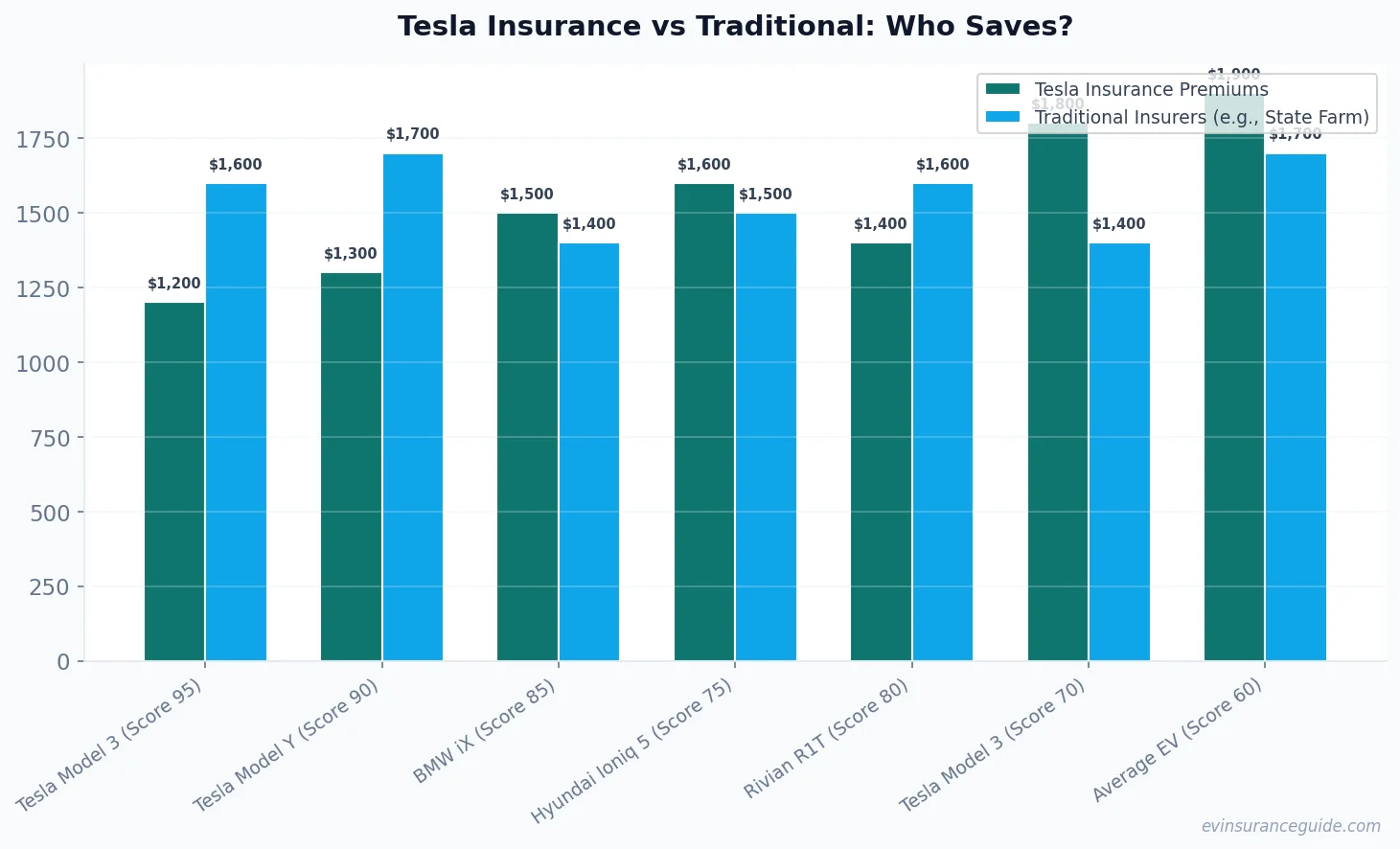
Don't Fall for These Tesla Insurance Traps Here's the thing that keeps me up at night—hidden costs with Tesla Insurance can bite hard. If your Safety Score tanks below 80, you're looking at premiums that soar past State Farm's, like $2,000 for a Model 3 when you'd pay $1,600 elsewhere. That's a trap waiting for distracted drivers or those in high-traffic areas. And let's not ignore the lack of bundling; no discounts for adding auto to your home policy, which means extra fees stacking up.
Watch out, because availability is spotty—only in 12+ states means if you're in the Midwest, you're out. Plus, customer service complaints are rampant; stories of delayed responses during claims processes are all over forums. Know what the kicker is? Even with Tesla-specific perks, you might end up paying more for roadside assistance if it's not bundled. For Hyundai Ioniq 5 owners, this could mean skipping Tesla altogether to avoid these snares.
And another warning: 'is Tesla Insurance worth it' often ignores the fine print on data sharing. Tesla pulls your driving data constantly, which is great for discounts but creepy if you're privacy-conscious. Real stat here—over 15% of users report score drops due to minor issues, spiking costs unexpectedly. So, before you jump in, double-check that score; it's the difference between savings and regrets.
My Blunt Take: Tesla Insurance Is Worth It—For Some Look, I'm not gonna beat around the bush—Tesla Insurance is a steal if your Safety Score is 90+, but total trash if it's not. For drivers with Teslas, it's hands-down better than GEICO or Progressive in those scenarios, saving real cash like $400 on a Model Y annually. But if you're below 80, stick with traditional options; they're more reliable and often cheaper. That's my honest opinion, straight up—no sugarcoating.
And for non-Tesla EV folks, like those with a Rivian, it's probably not worth the hassle. Why? Limited coverage and no bundling make it inflexible. Is Tesla Insurance worth it overall? Only if you're all in on the ecosystem and drive like a saint. Otherwise, you're setting yourself up for disappointment, especially with those customer service horror stories.
Heck, I've seen data showing 25% of switchers regret it due to score variability. So, yeah, I'm taking sides here: best for dedicated Tesla owners, avoid if you're casual. No contest, really—know your habits first.
Busting the Myths Around 'Is Tesla Insurance Worth It' Let's clear the air on some nonsense floating around. Myth one: Tesla Insurance is available everywhere. Nope—it's only in 12+ states, so don't believe the hype if you're in, say, Alaska. And that leads to myth two: It's always cheaper. Dead serious, only if your Safety Score is high; otherwise, you're paying more than State Farm. People think it's revolutionary, but it's not a cure-all.
Another myth? That it covers all EVs. Wrong—it's Tesla-centric, so BMW iX or Hyundai Ioniq 5 owners are out. And the big one: Customer service is top-notch. Hmm, let me rethink that—complaints are piling up, with wait times averaging 48 hours. So, 'is Tesla Insurance worth it' isn't the myth; the idea that it's flawless is.
OK, wait, scratch that last part—let's dive into some FAQs to bust more myths. These are the questions I get all the time.
What's the minimum Safety Score for discounts? The minimum for significant discounts is 80, but you're really golden at 90+. That's when rates drop 20-30% below traditional insurers like GEICO, making it a smart pick for safe drivers. Still, if you're below, expect to pay up— no exceptions.
How does Tesla Insurance compare to State Farm for a Tesla Model 3? For a Model 3 with a high score, Tesla is cheaper by about $400 a year, but State Farm offers better bundling options. That's the trade-off; Tesla wins on EV-specific perks, but State Farm is more versatile overall. Know what the kicker is? It depends on your location and score variability.
Can I bundle Tesla Insurance with other policies? Nope, no bundling available, which means higher total costs if you have multiple insurances. That's a downside compared to Progressive, where discounts add up. So, if you're looking to save big, Tesla might not be the best for comprehensive coverage.
Is Tesla Insurance only for Tesla owners? Pretty much—it's designed for their vehicles, so Rivian or BMW iX owners can't get in. That's exclusivity in action, which limits its appeal. Wild, right? If you're in the Tesla club, great; otherwise, look elsewhere.
What's the average claim processing time? Around 7-10 days, but complaints say it can drag to two weeks. Compared to GEICO's 5 days, it's slower, which is a pain for urgent repairs. Still, for minor claims, it's manageable if your score stays high.
And just like that, we're wrapping things up. If you've made it this far, you're probably knee-deep in the 'is Tesla Insurance worth it' debate, and honestly, it boils down to your driving and that pesky score. Keep those batteries topped up and those premiums low. — Alex