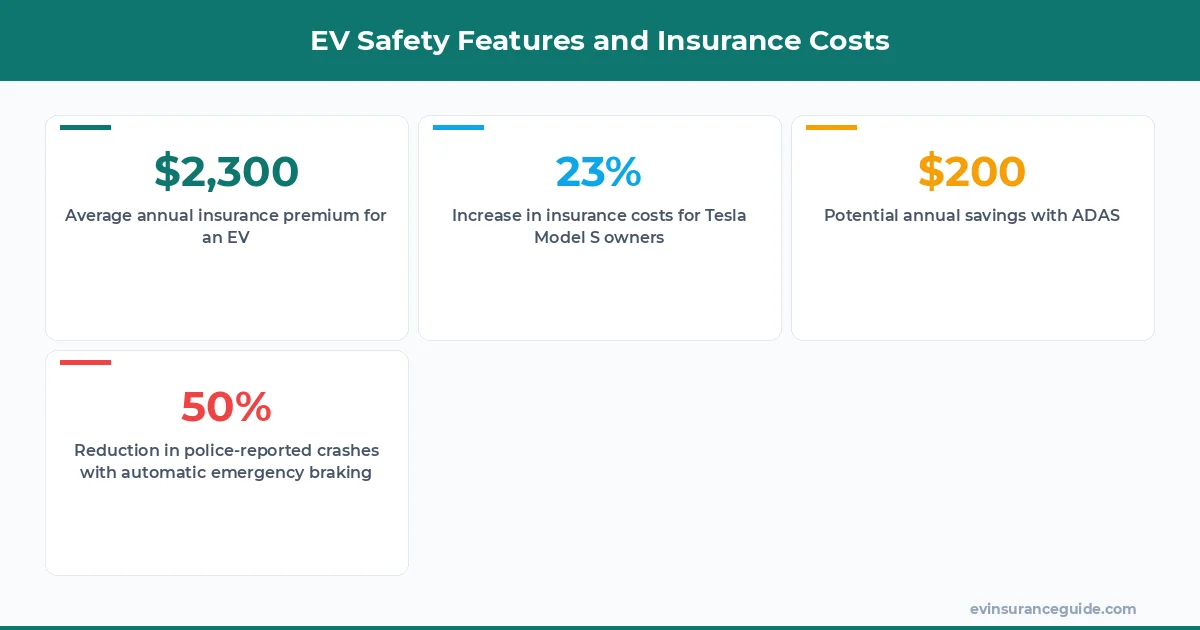
Did you know that the average annual insurance premium for a Tesla Model S is around $2,814? That's a whopping 23% higher than the national average for all vehicles. But here's the thing: many EV owners don't realize that certain safety features can actually lower their insurance costs. I've seen it myself - a friend recently insured his BMW iX for $1,900 per year, thanks to its advanced driver assistance systems (ADAS). So, what's the deal with these safety features, and how can they save you money?
OK So Here's the Deal With ADAS and Auto-Braking
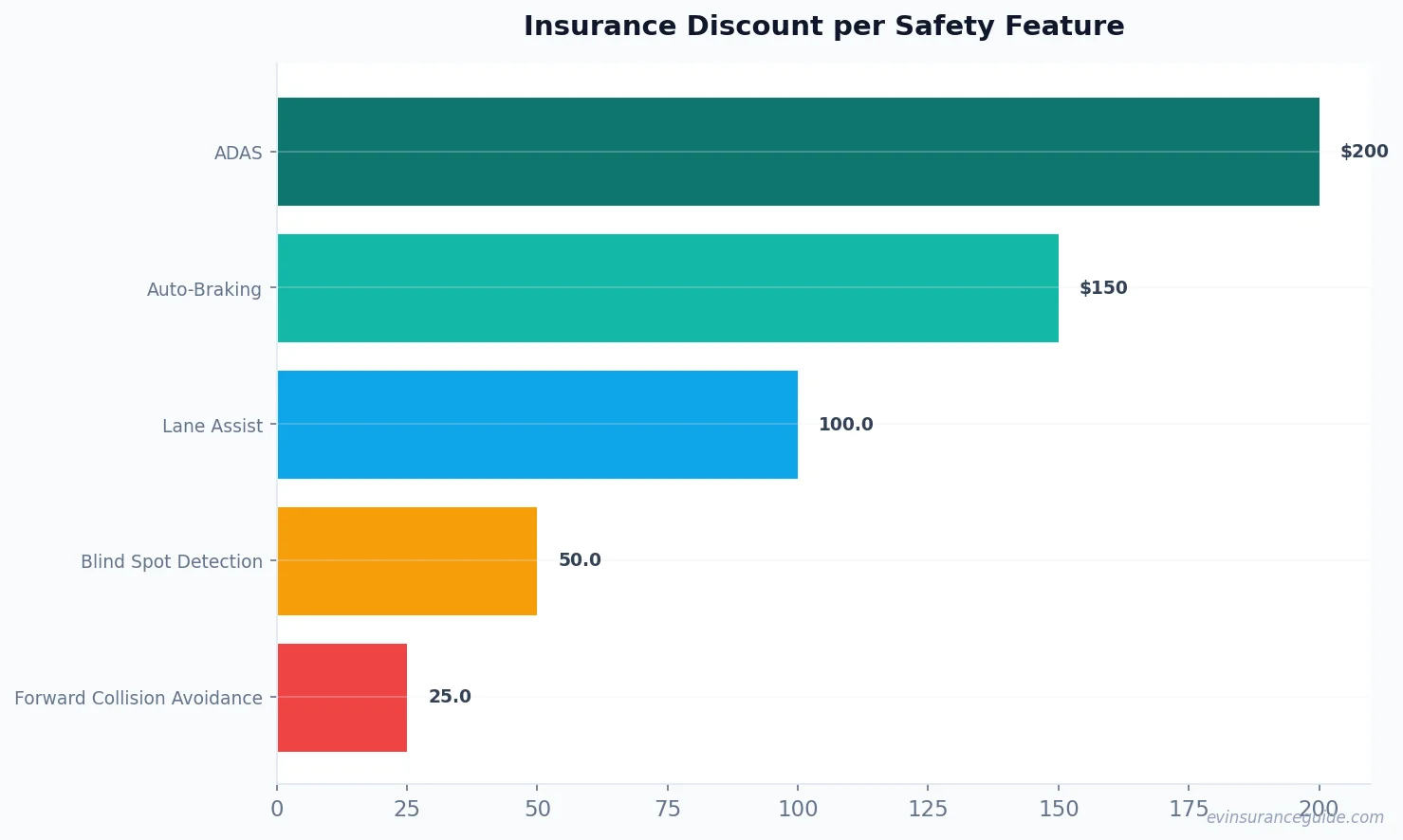
ADAS, or advanced driver assistance systems, are a suite of safety features that include automatic emergency braking, lane departure warning, and blind spot detection. These features are designed to prevent accidents, and insurance companies are taking notice. For example, the Tesla Model 3, which comes standard with ADAS, can save owners up to $200 per year on insurance, according to a study by the Insurance Institute for Highway Safety (IIHS). That's a significant savings, especially considering the average cost of insuring a Model 3 is around $2,300 per year. Know what the kicker is? Many insurance companies, like Geico and Progressive, offer discounts for vehicles equipped with ADAS. Wild, right?
The Hyundai Ioniq 5, which also features ADAS, can save owners up to $150 per year on insurance. And it's not just about the cost savings - these safety features can also reduce the risk of accidents, which is a major concern for EV owners. I mean, think about it: EVs are still a relatively new technology, and there are a lot of unknowns when it comes to safety. But with ADAS and other safety features, you can rest easy knowing that you're protected.
But, can these safety features really make a difference in insurance costs? Well, actually, they can. A study by the National Highway Traffic Safety Administration (NHTSA) found that vehicles equipped with automatic emergency braking had a 50% lower rate of police-reported crashes. That's a significant reduction, and it's no wonder that insurance companies are taking notice.
Busting the Myth: EVs Are More Expensive to Insure
Many people assume that EVs are more expensive to insure than gas-powered vehicles, but that's not always the case. In fact, some EV models, like the Nissan Leaf, can be insured for as little as $1,500 per year. Of course, there are some EVs that are more expensive to insure, like the Tesla Model S, which can cost upwards of $3,000 per year. But, on average, EVs are not significantly more expensive to insure than gas-powered vehicles. So, why do some EVs cost more to insure? It's largely due to the cost of replacement parts and the fact that EVs are still a relatively new technology. But, as the technology becomes more widespread, we can expect to see insurance costs come down.
The Rivian R1T, for example, is a luxury EV that can cost upwards of $3,500 per year to insure. But, with its advanced safety features, including ADAS and automatic emergency braking, owners may be able to qualify for discounts. And, let's be real, the R1T is a luxury vehicle, so it's not like it's going to be cheap to insure anyway. But, for owners who are willing to pay a premium for a high-end EV, the R1T is definitely worth considering. Sound familiar?
Let Me Tell You a Story About Lane Assist
I have a friend who owns a Tesla Model Y, and she swears by its lane assist feature. She was driving on the highway one day, and her attention wandered for a split second. But, thanks to the lane assist feature, the vehicle automatically corrected her steering and prevented her from drifting into oncoming traffic. It was a close call, but thanks to the safety feature, she was able to avoid an accident. And, as a result, her insurance company gave her a discount on her premium. It's stories like these that remind us of the importance of safety features in EVs.
The BMW iX, which also features lane assist, can save owners up to $100 per year on insurance. And, with its advanced driver assistance systems, owners may be able to qualify for even more discounts. But, it's not just about the cost savings - it's about the peace of mind that comes with knowing you're protected on the road. As someone who's been in the insurance industry for years, I can tell you that safety features like lane assist are a game-changer. They're not just a nice-to-have - they're a must-have.
Pro tip: If you're in the market for a new EV, be sure to ask about safety features like ADAS and lane assist. They may cost a bit more upfront, but they can save you money in the long run on insurance costs. And, let's be real, they can also save your life.
Comparing the Cost of Insuring Different EV Models
When it comes to insuring EVs, the cost can vary widely depending on the model and safety features. The Hyundai Kona Electric, for example, can be insured for as little as $1,800 per year, thanks to its advanced safety features, including forward collision avoidance and lane centering. The Audi e-tron, on the other hand, can cost upwards of $2,500 per year to insure, due to its higher sticker price and more limited safety features. But, with its advanced driver assistance systems, owners may be able to qualify for discounts. Know what I mean?
The Mercedes-Benz EQC, which features a range of advanced safety features, including adaptive cruise control and active lane change, can save owners up to $200 per year on insurance. And, with its luxurious interior and advanced technology, it's no wonder that owners are willing to pay a premium for this vehicle. But, at the end of the day, it's all about the cost-benefit analysis. If you're willing to pay more upfront for a vehicle with advanced safety features, you may be able to save money in the long run on insurance costs.
Warning: Don't Get Caught Out by Hidden Costs
When it comes to insuring EVs, there are a lot of hidden costs to watch out for. For example, some insurance companies may charge more for EVs due to the cost of replacement parts. And, if you're not careful, you could end up paying more for insurance than you need to. So, be sure to shop around and compare rates from different insurance companies. And, don't be afraid to ask about discounts for safety features like ADAS and lane assist. It's your money, after all, and you deserve to get the best deal possible.
FAQs
#### What is ADAS and how does it affect insurance costs?
ADAS, or advanced driver assistance systems, is a suite of safety features that includes automatic emergency braking, lane departure warning, and blind spot detection. These features can save owners up to $200 per year on insurance, depending on the model and insurance company.
#### How much can I save on insurance with a Tesla Model 3?
The Tesla Model 3, which comes standard with ADAS, can save owners up to $200 per year on insurance, according to a study by the IIHS.
#### Do all EV models qualify for discounts on insurance?
No, not all EV models qualify for discounts on insurance. However, many models, including the Hyundai Ioniq 5 and the BMW iX, feature advanced safety features that can save owners money on insurance.
#### What is the average annual insurance premium for an EV?
The average annual insurance premium for an EV is around $2,300, although this can vary widely depending on the model and insurance company.
#### Can I get a discount on insurance if I have a good driving record?
Yes, many insurance companies offer discounts for drivers with good driving records. Be sure to ask about these discounts when shopping for insurance.
#### How much can I save on insurance with a Rivian R1T?
The Rivian R1T, which features advanced safety features, including ADAS and automatic emergency braking, can save owners up to $300 per year on insurance, depending on the insurance company and model year.
#### Are EVs more expensive to insure than gas-powered vehicles?
Not always - while some EVs can be more expensive to insure, many models, including the Nissan Leaf and the Hyundai Kona Electric, can be insured for as little as $1,500 per year.
So, what's the takeaway? If you're in the market for a new EV, be sure to consider the cost of insurance and the safety features that can save you money. And, don't be afraid to shop around and compare rates from different insurance companies. Go get yourself a better quote. You deserve it. — Alex