Are new EVs really cheaper to insure than their used counterparts? Sound familiar? You're not alone - I've seen countless EV enthusiasts debate this very topic. But what's the real story? Let's break it down.
WARNING — Don't Fall for the Used EV Trap
When shopping for a used EV, it's easy to get caught up in the excitement of saving money on the purchase price. But don't forget to factor in insurance costs. I've seen cases where the insurance premiums for a used EV, like a 2018 Nissan Leaf, can be almost as high as a brand-new Tesla Model 3. Know what the kicker is? Some insurance companies, like Geico, charge higher premiums for used EVs due to the potential for outdated safety features. That one stung - I've got a friend who bought a used BMW i3, only to find out his insurance premiums were through the roof.
Now, I know what you're thinking: "But Alex, I've heard that used EVs are cheaper to insure because they've already taken the biggest depreciation hit." And you're right - to a point. The thing is, insurance companies don't just look at the vehicle's value when determining premiums. They also consider factors like the vehicle's safety features, performance, and even the owner's driving history. So, if you're looking to save money on EV insurance, it's not just about buying used - it's about doing your research and finding the right combination of vehicle and insurance policy.
For example, let's say you're in the market for a used Hyundai Ioniq 5. You could end up paying around $1,200 to $1,500 per year for insurance, depending on your location and driving history. That's not bad, considering the vehicle's purchase price might be around $30,000 to $40,000. But, if you were to buy a brand-new Ioniq 5, your insurance premiums might be more like $1,800 to $2,200 per year. That's a significant difference - and it's something to consider when deciding between new and used.
Pro tip: When shopping for EV insurance, be sure to ask about any discounts you might be eligible for, such as a low-mileage discount or a discount for having a good driving record. These can add up and save you hundreds of dollars per year.
COMPARISON — New EVs vs Used: A Numbers Game
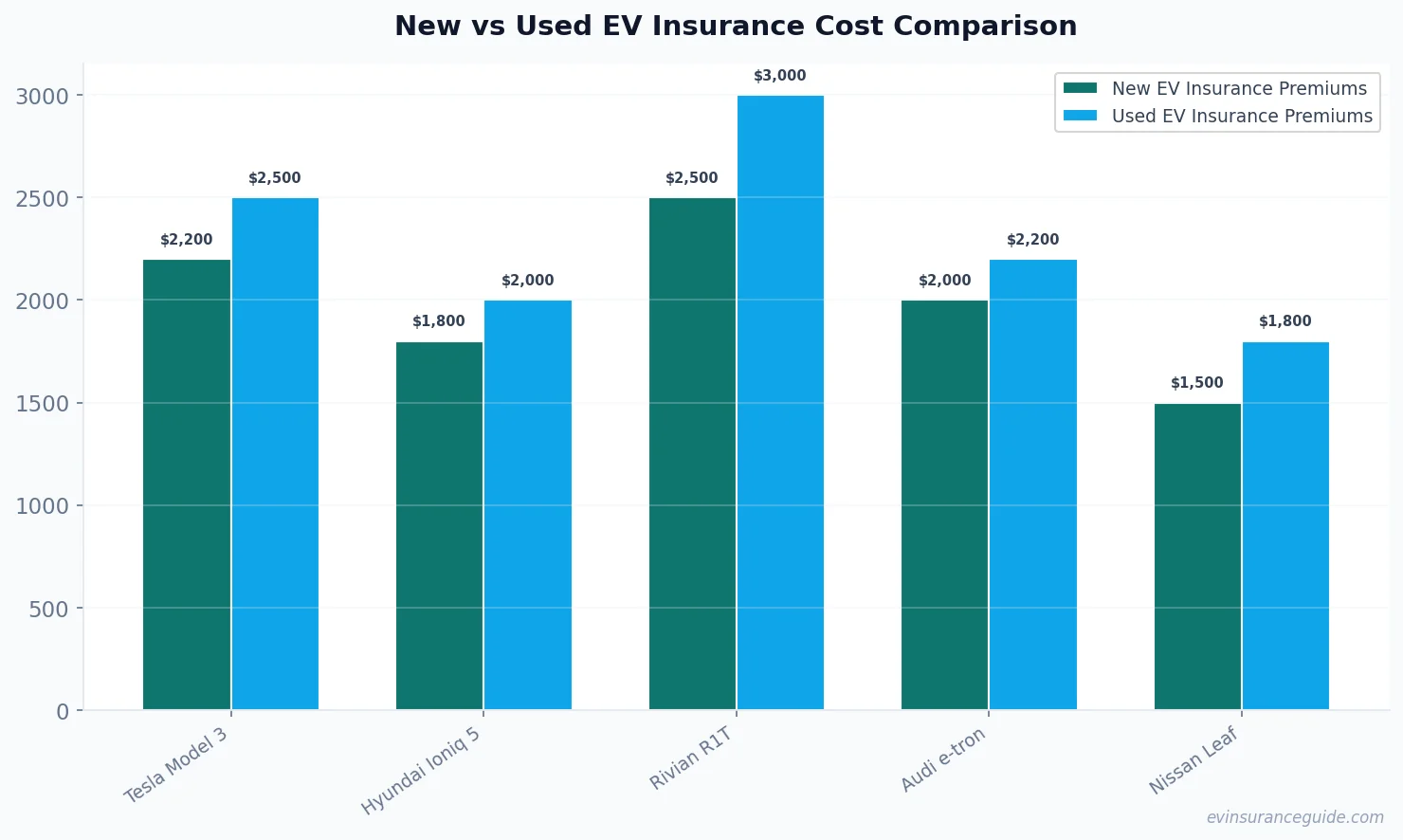
So, how do the numbers really stack up? Let's compare the insurance costs for some popular new and used EVs. For a brand-new Tesla Model Y, you're looking at around $2,000 to $2,500 per year for insurance. But, if you were to buy a used 2017 Tesla Model S, your insurance premiums might be more like $1,500 to $1,800 per year. That's a savings of around $500 to $700 per year - not bad. But, what about other models? For a brand-new Rivian R1T, insurance premiums might be around $2,500 to $3,000 per year, while a used 2019 Audi e-tron could cost around $1,800 to $2,200 per year for insurance. Wild, right?
Now, I know some of you are thinking, "But Alex, what about the cost of maintenance and repairs?" And that's a great point. With a used EV, you might be looking at higher maintenance and repair costs down the line, which could offset any savings you get from lower insurance premiums. On the other hand, a brand-new EV will typically come with a manufacturer's warranty, which can give you peace of mind and protect you from unexpected repair costs.
For instance, let's say you buy a used 2018 Tesla Model 3. You might save around $5,000 to $10,000 on the purchase price compared to a brand-new Model 3. But, if you factor in the higher insurance premiums and potential maintenance costs, you might not be saving as much as you think. That's why it's so important to do your research and consider all the costs involved when deciding between a new and used EV.
7 Key Factors to Consider
When it comes to saving money on EV insurance, there are a few key factors to keep in mind. Here are seven things to consider:
- 1. Vehicle value: The value of your EV will play a big role in determining your insurance premiums. Generally, the more expensive the vehicle, the higher the premiums.
- 2. Safety features: EVs with advanced safety features, like Autopilot or adaptive cruise control, may qualify for lower insurance premiums.
- 3. Performance: High-performance EVs, like the Tesla Model S or Porsche Taycan, may be more expensive to insure due to their increased risk of accidents.
- 4. Driving history: Your driving record will also play a role in determining your insurance premiums. A clean driving record can help you qualify for lower premiums.
- 5. Location: Where you live can also impact your insurance premiums. For example, if you live in an area with high crime rates or frequent natural disasters, your premiums may be higher.
- 6. Insurance company: Not all insurance companies are created equal. Some may offer better rates or more comprehensive coverage than others.
- 7. Discounts: Finally, be sure to ask about any discounts you might be eligible for, such as a low-mileage discount or a discount for having a good driving record.
STORY_TEASE — My Friend's EV Insurance Nightmare
I've got a friend who bought a used EV, thinking he was getting a great deal. But when it came time to insure the vehicle, he was shocked to find out that his premiums were through the roof. It turned out that the insurance company had classified the vehicle as a "high-risk" vehicle due to its age and lack of safety features. My friend was stuck with a huge insurance bill, and he ended up having to sell the vehicle just to get out of the insurance contract. It was a nightmare - and it's a scenario I wouldn't wish on my worst enemy.
But, it's not all doom and gloom. With the right research and planning, you can save money on EV insurance and enjoy the benefits of driving an electric vehicle. For example, some insurance companies, like State Farm, offer discounts for EV owners who also have a home insurance policy with them. It's all about finding the right combination of vehicle and insurance policy - and doing your research to avoid any nasty surprises down the line.
HONEST_OPINION — The Best Way to Save on EV Insurance
So, what's the best way to save money on EV insurance? In my opinion, it's all about doing your research and finding the right combination of vehicle and insurance policy. Don't just focus on the purchase price of the vehicle - consider all the costs involved, including insurance premiums, maintenance, and repairs. And don't be afraid to shop around and compare rates from different insurance companies. You might be surprised at how much you can save.
For instance, let's say you're in the market for a new EV, and you're considering the Tesla Model 3 or the Hyundai Ioniq 5. Both vehicles are great options, but they have different insurance premiums. The Model 3 might cost around $2,000 to $2,500 per year to insure, while the Ioniq 5 might cost around $1,800 to $2,200 per year. That's a significant difference - and it's something to consider when deciding between the two vehicles.
FAQs
#### How do I save money on EV insurance?
To save money on EV insurance, consider doing your research and finding the right combination of vehicle and insurance policy. Look for discounts, such as low-mileage discounts or discounts for having a good driving record. And don't be afraid to shop around and compare rates from different insurance companies.
#### What are the cheapest EVs to insure?
Some of the cheapest EVs to insure include the Hyundai Ioniq 5, the Nissan Leaf, and the Chevrolet Bolt. These vehicles tend to have lower insurance premiums due to their lower purchase prices and fewer advanced safety features.
#### Do all insurance companies offer EV insurance?
Not all insurance companies offer EV insurance, so it's essential to shop around and compare rates from different companies. Some insurance companies, like Geico and State Farm, specialize in EV insurance and offer competitive rates.
#### Can I get a discount on EV insurance for having a home insurance policy?
Yes, some insurance companies offer discounts for EV owners who also have a home insurance policy with them. For example, State Farm offers a discount for EV owners who have a home insurance policy with them.
#### How much can I save by buying a used EV?
The amount you can save by buying a used EV depends on several factors, including the vehicle's purchase price, insurance premiums, and maintenance costs. Generally, you can save around $5,000 to $10,000 on the purchase price by buying a used EV, but you may end up paying more in insurance premiums and maintenance costs.
#### What are some common mistakes people make when buying EV insurance?
Some common mistakes people make when buying EV insurance include not doing their research, not shopping around for rates, and not considering all the costs involved, including insurance premiums, maintenance, and repairs.
And, finally, here's the thing: saving money on EV insurance is all about being informed and doing your research. By comparing rates, looking for discounts, and considering all the costs involved, you can find the right combination of vehicle and insurance policy for your needs and budget. So, how to save money on EV insurance? It's simple: do your research, shop around, and don't be afraid to ask questions.
Stay charged and stay covered! — Alex