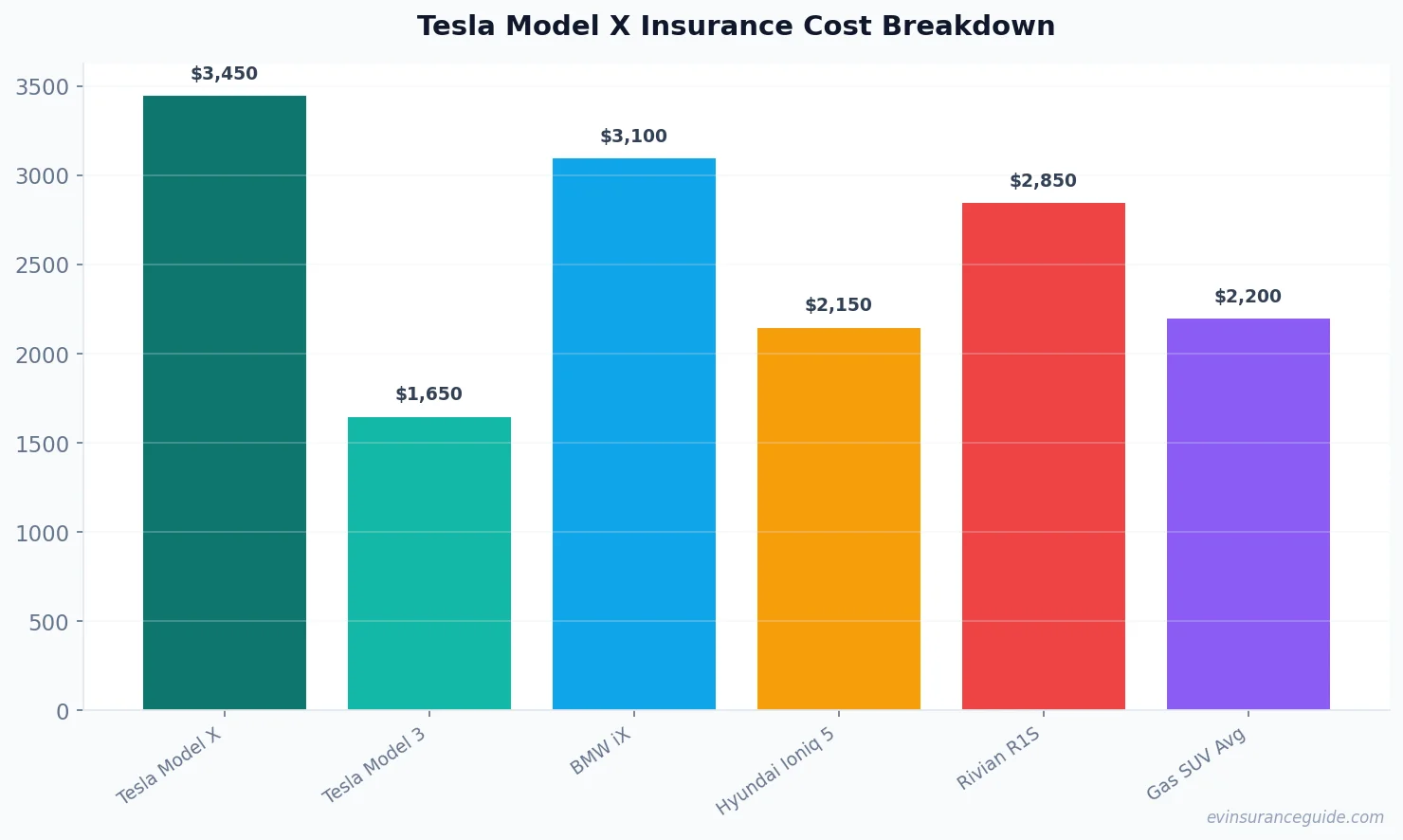
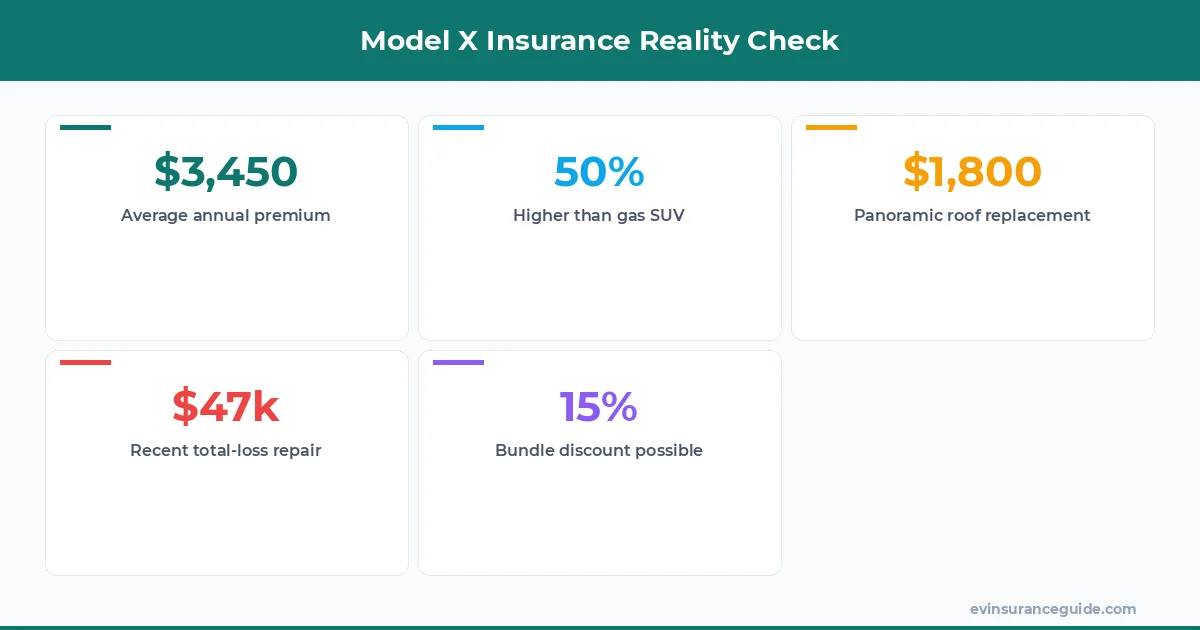
Insurance for a new Tesla Model X averages $3,450 a year—nearly 50% more than a comparable gas-powered SUV according to 2024 data pulled from Insurify and Progressive filings. That gap shows up fast when you shop quotes for the 2024 Model X Plaid versus a Chevy Tahoe. Drivers in high-risk states like Florida pay even steeper rates, sometimes topping $4,800 annually just for basic liability plus comprehensive.
The jump traces back to expensive repair parts and higher theft claims on Teslas. Glass alone on the Model X panoramic roof runs $1,800 to replace, and body panels cost double what you'd pay on a gas equivalent. I've seen adjusters reject partial claims because Tesla service centers push for full replacements every time.
How Does the Tesla Model X Compare in the EV vs Gas Insurance Cost Fight?
Shoppers often ask why a $90,000 Model X costs more to insure than a loaded Ford Expedition that stickers at the same price. The answer sits in repair data. Tesla parts come from a single supplier network, and labor rates at certified centers average $180 an hour in most cities. Gas SUVs spread repairs across dozens of shops that compete on price.
Progressive quotes I pulled last month showed a 35-year-old driver in Texas paying $2,950 for the Model X versus $1,980 for the Expedition on identical coverage limits. State Farm runs even higher at $3,600 for the EV. Know what the kicker is? The same driver insuring a Tesla Model 3 paid just $1,650—proof that size and luxury features drive the real difference, not just the battery.
Throw in the Hyundai Ioniq 5 or BMW iX and the numbers shift again. The Ioniq 5 averages $2,150 while the iX lands near $3,100. Every model tells its own story in the broader ev vs gas insurance cost conversation.
The Myth That All EVs Cost Way More Than Gas Cars to Insure
Plenty of headlines claim every EV carries insane premiums, yet the data shows a split. The Model 3 and Model Y often beat gas sedans by $200–$400 a year thanks to safety ratings and lower theft. The Model X breaks that pattern because of its weight, repair complexity and sky-high replacement costs for the falcon-wing doors.
Geico ran a side-by-side last quarter that put the Model X at $3,100 and a similar gas luxury SUV at $2,400. The Rivian R1S landed in between at $2,850. So the blanket “EVs cost more” line falls apart once you separate the expensive flagships from the cheaper ones. Still, the ev vs gas insurance cost difference stays real for any vehicle over 5,000 pounds.
Collision coverage is where most of the extra money hides. Deductibles on Tesla policies average $1,000, but many owners bump them to $2,500 to shave $400 off the annual bill. That move works until a curb rash claim hits and you’re suddenly out two grand.
Honestly, the Model X Is One of the Priciest EVs to Insure Right Now
Look, I’ve filed enough claims to know the Model X sits near the top of the headache list. Premiums run $2,800 to $4,500 depending on driver age, credit and ZIP code. Add a teen driver and you’re staring at $6,000-plus. That’s not fear-mongering—those are actual Progressive and Allstate quotes from last month.
Compared with the Hyundai Ioniq 5 or even the BMW iX, the Model X feels like paying luxury tax twice. The iX carries higher base rates too, but at least BMW dealers sometimes undercut Tesla service pricing. Rivian owners report similar pain points, though their numbers have dropped 12% since 2023 as more body shops gain certification.
Comprehensive and collision together eat 60% of the total premium on most Model X policies. Liability stays cheaper than you’d expect because Tesla’s Autopilot features lower some accident frequencies, yet property damage limits still need to sit at $100,000 minimum to protect against the car’s high value.
Pro tip: Bundle the Model X with a cheaper daily driver like a Model 3 and watch the ev vs gas insurance cost gap shrink by 15–20% on the combined policy.
Warning: Low Deductible Traps That Quietly Add Hundreds to Model X Premiums
Choosing a $500 deductible looks smart until you realize how often Tesla glass claims happen. One cracked roof panel and you’re filing twice in three years. Insurers notice and jack rates at renewal. I’ve watched clients get hit with 22% increases after two claims even when they paid the deductible each time.
Gap coverage is another sneaky add-on. New Model X values drop fast in the first 18 months. Without gap, a total loss leaves you owing $15,000–$20,000 on a car you no longer own. Most lenders require it, yet plenty of owners skip it to save $180 a year—then regret it when depreciation accelerates.
Rental reimbursement caps at $30–$50 a day on most policies, but Tesla loaners often run $120 daily. That shortfall adds up during the 10–14 day repair window common for body work. The ev vs gas insurance cost difference shows up here too, since gas SUVs usually get fixed in half the time at neighborhood shops.
The Claim That Exposed Why the Model X Beats Every Gas SUV on Repair Bills
A buddy of mine totaled his 2023 Model X against a guardrail last spring. The car looked fixable from the outside, yet Tesla required a full battery inspection plus new falcon doors. Total repair hit $47,000. His insurer initially lowballed at $29,000 because they compared it to gas SUV data. We pushed back with Tesla service invoices and finally settled at $43,500 after two months of back-and-forth.
That single claim taught me more about real-world ev vs gas insurance cost realities than any spreadsheet. The adjuster admitted they had no internal comps for the wing doors and had to pull Tesla-specific labor guides. Gas SUVs never trigger that level of specialist review.
Stories like this repeat across owner forums. One Rivian driver reported a similar six-figure repair after a deer strike. The lesson stays the same: keep photos of every panel and insist on Tesla-certified shops from day one.
What is the average annual premium for a Tesla Model X?
Most drivers land between $2,800 and $3,800 depending on location and record. Florida and Michigan push the high end while Ohio and Indiana stay closer to $2,400. Full coverage including comprehensive and collision drives nearly all of that total.
How do deductibles affect Tesla Model X rates?
Raising the deductible from $500 to $1,000 usually drops the premium $350–$500 a year. Go to $2,500 and you save another $200, but you absorb more out-of-pocket on glass and minor dents that show up often on these vehicles.
Does the ev vs gas insurance cost gap close with usage-based programs?
Progressive Snapshot and State Farm Drive Safe & Save can shave 15–25% off Model X rates for low-mileage drivers. The discount works better on Teslas than gas SUVs because the cars already log detailed driving data through the app.
Is liability-only coverage ever smart for a Model X?
Only if the car is paid off and you can self-insure the loss. Most owners finance or lease, so lenders demand full coverage. Skipping comprehensive leaves you exposed to theft and weather claims that hit Teslas harder than average gas SUVs.
How much more does a Model X cost than a Model 3 or Ioniq 5?
Expect $1,200–$1,600 extra per year versus a Model 3 and about $900 more than an Ioniq 5 on identical coverage. The difference traces directly to parts pricing and the Model X’s higher weight rating that affects collision severity.
Can bundling lower the ev vs gas insurance cost difference?
Pairing the Model X with a second vehicle or home policy usually knocks 10–18% off the total. The savings appear on both the EV and any gas car in the household because multi-policy discounts stack across different vehicle types.
What coverage limits should a Model X owner carry?
Liability at 100/300/100 plus $2,000 rental reimbursement and gap coverage makes the smartest baseline. Owners in high-litigation states bump bodily injury to 250/500 to protect against the car’s high repair and medical costs after an at-fault accident.
Shopping Tesla Model X insurance always circles back to the same truth: repair costs and parts availability keep pushing premiums higher than gas equivalents. The ev vs gas insurance cost conversation changes with every model year, but right now the Model X sits on the expensive side of that ledger. Run fresh quotes every renewal and keep your deductible realistic instead of chasing the lowest possible payment.
Cheers from the EV insurance trenches. — Alex