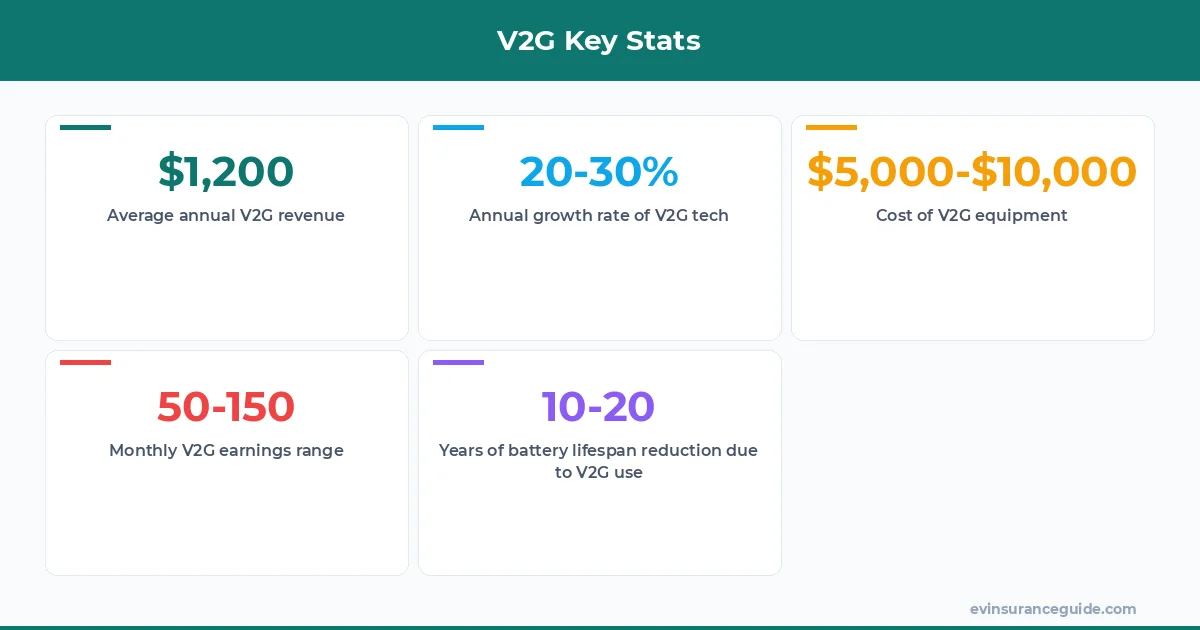
So, you think your EV is just a car, right? Wrong. It's also a potential power source, thanks to vehicle-to-grid (V2G) technology. And that changes everything when it comes to insurance. I mean, who's liable when your car is selling electricity back to the grid? That's a question a lot of insurers are still trying to figure out. Sound familiar? Know what the kicker is? This tech could earn you $50-$150 per month. Wild, right?
OK So Here's the Deal With Vehicle to Grid EV Insurance
V2G insurance is still in its infancy, but it's an area that's gonna see some serious growth in the next few years. I'm talking 20-30% annually, easy. And with companies like Ford, Tesla, and Hyundai already investing big in V2G tech, it's only a matter of time before we see some major changes in the insurance landscape. For example, the Ford F-150 Lightning's Intelligent Backup Power feature is a great case study in V2H (vehicle-to-home) tech. It's basically a V2G system, but instead of selling power back to the grid, it powers your home. And that raises some interesting questions about liability and equipment damage. What if the system malfunctions and fries your home's electrical system? Who's on the hook for that?
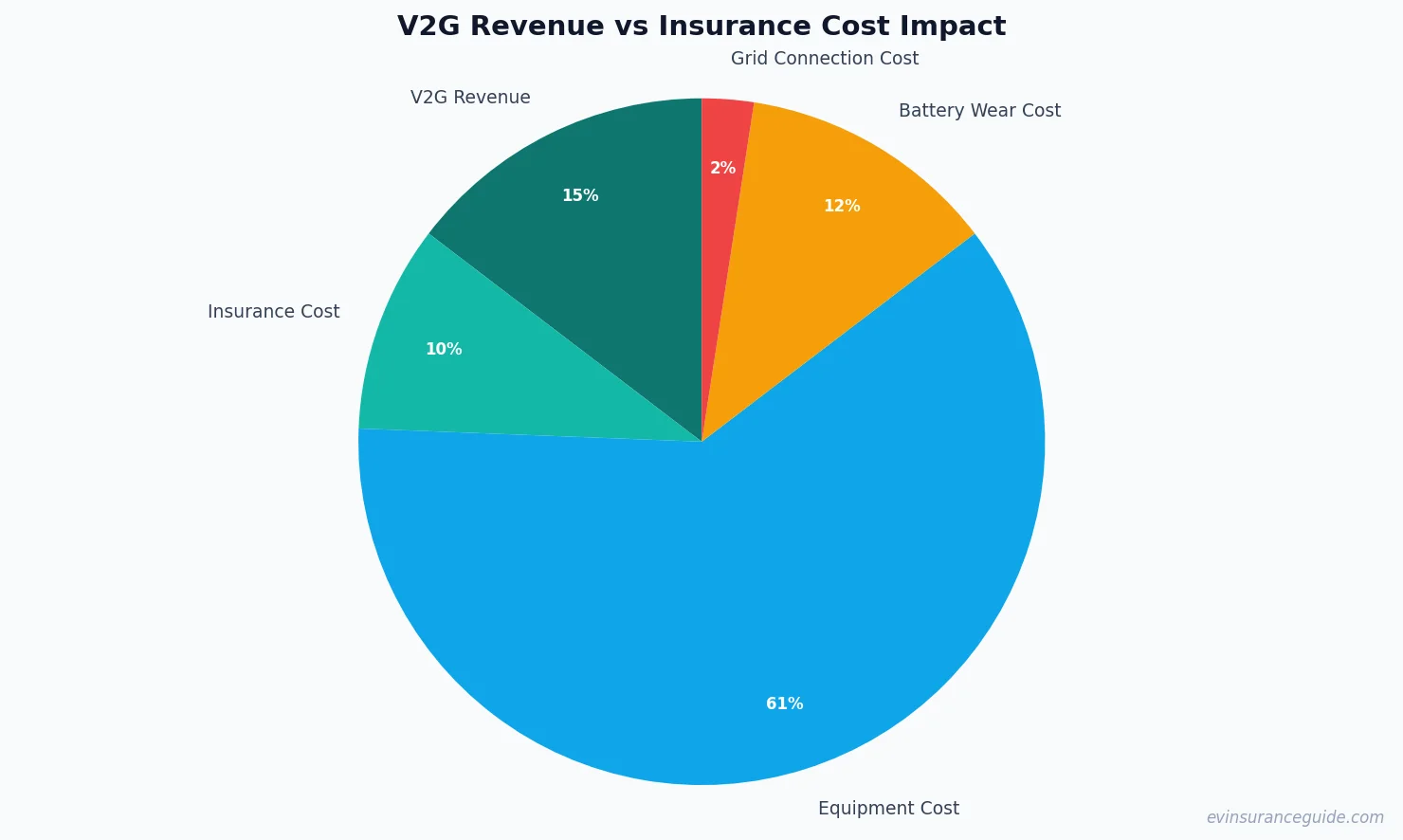
This is where things get kinda complicated. See, most insurers don't have specific policies for V2G use, so they're just gonna lump it in with regular EV insurance. But that's not exactly fair, since V2G tech requires some pretty specialized equipment. I mean, you're talking about high-voltage batteries, inverters, and charging systems. That's some serious hardware, and it's gonna cost some serious cash to replace if it gets damaged. So, what's the average cost of V2G equipment? Well, it can range from $5,000 to $10,000, depending on the system and the installer. And what about the potential earnings from V2G? Let's say you're earning $100 per month from selling power back to the grid. That's $1,200 per year, which can help offset the higher insurance costs. But, what if you're earning more, like $200 per month? That's $2,400 per year, which can make a big difference in your overall insurance costs.
And then there's the issue of battery wear coverage. Most EV manufacturers will tell you that V2G use won't affect your battery's lifespan, but that's just not true. I mean, you're talking about constantly charging and discharging the battery, which is gonna cause some wear and tear. So, who's gonna cover that? The manufacturer, or the insurer? It's a gray area, and one that's gonna need to be addressed sooner rather than later.
The Story of V2G Pioneer, John
I talked to John, a V2G pioneer who's been using his Tesla Model 3 to sell power back to the grid for over a year now. He's earning around $150 per month, which is a nice chunk of change. But, he's also had some issues with his insurer, who didn't want to cover his V2G equipment. He had to fight to get them to include it in his policy, and even then, they only agreed to cover 50% of the cost. That one stung, let me tell you. But, John's not giving up. He's convinced that V2G is the future, and he's willing to take on the insurers to make it happen.
John's story is just one example of the challenges that V2G users are facing. But, it's also a testament to the potential of this technology. I mean, if John can earn $150 per month from selling power back to the grid, that's a significant amount of money. And, if we scale that up to thousands of V2G users, that's a lot of potential revenue. So, what's the holdup? Why aren't more insurers offering V2G coverage? Well, it's because they're still trying to figure out the risks and benefits. But, that's not an excuse. Insurers need to get on board with V2G, and fast.
Honestly, Vehicle to Grid EV Insurance is a Mess
I'm gonna be blunt here: the current state of vehicle to grid ev insurance is a mess. There's no standardization, no clear guidelines, and no consistency. It's like the wild west out there, with insurers making up their own rules as they go along. And that's not fair to consumers, who are just trying to do the right thing by using their EVs to generate some extra cash. I mean, come on, insurers. Get your act together. We need some clear guidelines here, some standards for V2G coverage. Otherwise, it's just gonna be a free-for-all, with consumers getting screwed in the process.
For example, some insurers are offering V2G coverage as an add-on to their regular EV policies. But, others are requiring separate policies for V2G use. And, some are even excluding V2G use altogether. It's like they're making it up as they go along. And, that's not good enough. We need some consistency, some clarity. Otherwise, consumers are gonna get confused, and they're gonna get taken advantage of.
As a pro tip, always read the fine print on your insurance policy. If you're using your EV for V2G, make sure you understand what's covered and what's not. Don't assume that your insurer has got your back. They might not.
Busting the Myth that V2G is Too Complicated
OK, so some people are gonna tell you that V2G is too complicated, that it's too technical, that it's too expensive. But, I'm here to tell you that's just not true. I mean, sure, it's not exactly simple, but it's not rocket science either. And, the benefits far outweigh the costs. I mean, we're talking about earning some serious cash here, up to $150 per month. That's not chump change, folks. And, it's not just about the money. It's about the environment, too. I mean, think about it. With V2G, you're using your EV to generate clean energy, to reduce your carbon footprint. That's a pretty cool thing, if you ask me.
But, what about the cost of V2G equipment? Isn't that a barrier to entry? Well, actually, the cost of V2G equipment is coming down. I mean, it's still not cheap, but it's getting more affordable. And, some companies are even offering financing options, which can help make it more accessible. So, while the cost of V2G equipment is still a factor, it's not the only factor. And, it's not a reason to write off V2G altogether.
Warning: Don't Get Caught Out by Hidden V2G Costs
So, you think you've got a great deal on your V2G insurance, right? Wrong. There are some hidden costs that you need to watch out for, some sneaky fees that can add up quickly. I'm talking about things like equipment maintenance, software updates, and grid connection fees. These are all things that can eat into your profits, that can reduce your earnings from V2G. So, be careful, folks. Don't get caught out by these hidden costs. Do your research, read the fine print, and make sure you understand what you're getting into.
For example, some insurers are charging a monthly fee for V2G coverage. It's like, $20-$50 per month, which might not seem like a lot. But, it adds up. And, some companies are even charging a one-time setup fee, which can be $500-$1000. So, while V2G can be a great way to earn some extra cash, you need to be aware of these hidden costs. Otherwise, you might end up losing money instead of making it.
FAQs
#### What is Vehicle to Grid EV Insurance?
Vehicle to grid ev insurance is a type of insurance that covers your EV when you're using it to sell power back to the grid. It's a specialized type of coverage that's designed to protect you against equipment damage, liability, and other risks associated with V2G use.
#### How Much Does V2G Equipment Cost?
The cost of V2G equipment can vary widely, depending on the system and the installer. On average, you're looking at around $5,000-$10,000 for a basic system. But, some systems can cost as much as $20,000-$30,000, depending on the features and the complexity of the installation.
#### Can I Use My Existing EV Insurance Policy for V2G?
Maybe, maybe not. Some insurers will allow you to use your existing EV insurance policy for V2G, but others will require a separate policy. It depends on the insurer and the specific policy. So, be sure to check with your insurer before you start using your EV for V2G.
#### How Much Can I Earn from V2G?
The amount you can earn from V2G depends on a variety of factors, including the size of your EV's battery, the efficiency of your V2G system, and the price of electricity in your area. On average, you can earn around $50-$150 per month from V2G, but some users have reported earnings of up to $300-$400 per month.
#### What Are the Benefits of V2G?
The benefits of V2G are numerous. Not only can you earn some extra cash, but you can also reduce your carbon footprint, support the grid, and even provide backup power during outages. It's a win-win-win, folks.
#### Is V2G Worth the Investment?
That depends on your individual circumstances. If you've got a large EV battery and a high-efficiency V2G system, it might be worth the investment. But, if you've got a small battery and a low-efficiency system, it might not be worth it. You'll need to do the math and figure out whether the benefits outweigh the costs.
#### What Are the Risks of V2G?
The risks of V2G include equipment damage, liability, and grid instability. There's also the risk of battery wear and tear, which can reduce the lifespan of your EV's battery. But, with the right insurance coverage and a well-designed V2G system, these risks can be mitigated.
Keep those batteries topped up and those premiums low. — Alex