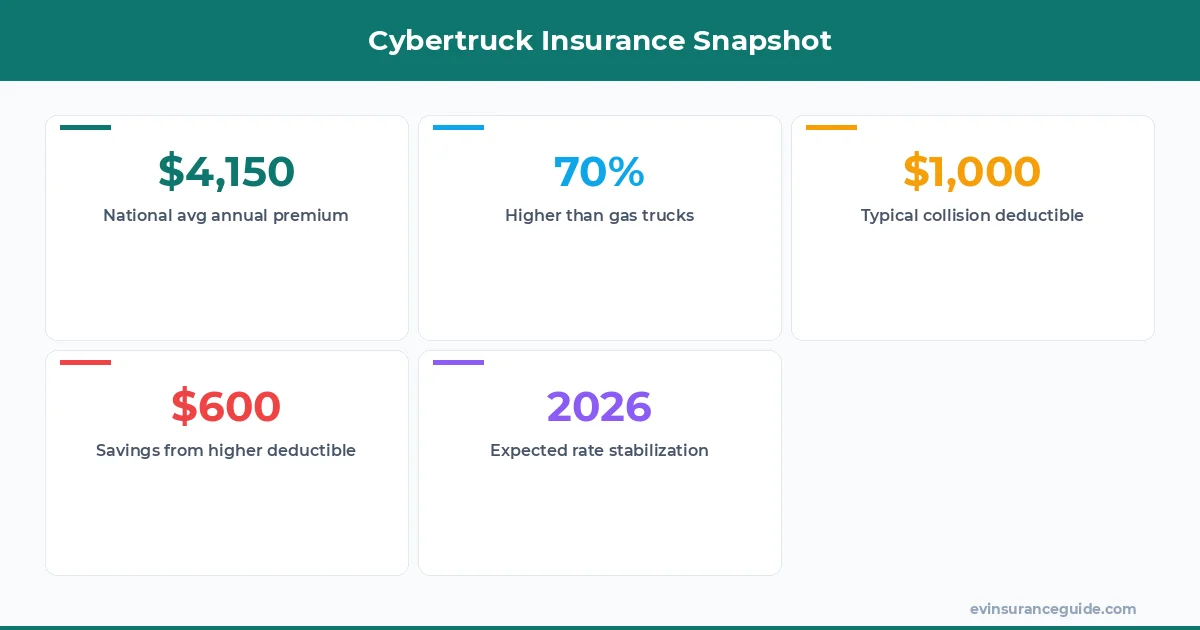
EV insurance premiums hit record highs last year with the average Tesla Cybertruck policy running $4,150 annually according to data pulled from major carriers. That single number jumped out at me because it sits nearly 70 percent above what most gas-powered full-size trucks cost in the same ZIP codes.
Owners keep asking why is EV insurance so expensive and the Cybertruck lands right in the crosshairs. Parts cost a fortune, repair times stretch for weeks, and the truck's weight plus 800-volt architecture scare underwriters. I have seen quotes swing from $2,900 up to $6,800 depending on driver age and location.
The gap shows up clearest when you stack it against a Tesla Model Y. Same company, same driver profile, and the Model Y often lands $1,400 cheaper per year. The Cybertruck's novelty and limited repair network push the price higher still.
That time a client called me after his first Cybertruck quote came back Mark from Austin got his Cybertruck in March and immediately shopped coverage. His current policy on a Ford F-150 sat at $1,980 a year. The new quote from Progressive landed at $5,100. He called me twice to confirm the numbers were real. They were. The adjuster flagged the stainless-steel body and 35-inch tires as high-risk items.
Three weeks later Mark found a local shop that already trained on Cybertruck panels. His rate dropped to $4,050 with the same carrier. One phone call and some paperwork saved him over a grand. Stories like his keep repeating because repair knowledge is still catching up.
That price swing highlights why is EV insurance so expensive in practice. Carriers price in the unknown until enough data exists. Early adopters absorb the hit.
How much does full coverage on a Cybertruck really run each year? Full coverage averages $4,150 nationwide for a clean-record driver over 35. Bump that driver to under 25 and the same policy climbs to $6,300 at Geico. Add a Miami ZIP code and State Farm pushes past $7,400.
Collision deductibles sit between $500 and $1,000 for most Cybertruck policies. Comprehensive usually matches or sits $100 lower. Raising the deductible to $1,500 knocks roughly $600 off the annual premium, but you feel that hit hard if the stainless panels get dented.
Liability minimums alone run $1,100 to $1,600. Most owners add $100,000/$300,000 bodily injury plus $100,000 property damage because the truck weighs over 6,800 pounds. One rhetorical question keeps coming up in these conversations: do you really want to skimp on liability when the vehicle can cause serious damage?
The myth that all EVs cost the same to insure as gas trucks Plenty of headlines claim EVs cost less to insure because of fewer moving parts. That myth falls apart fast with the Cybertruck. Its repair costs exceed those of a gas F-150 by about 45 percent according to claims data from Travelers.
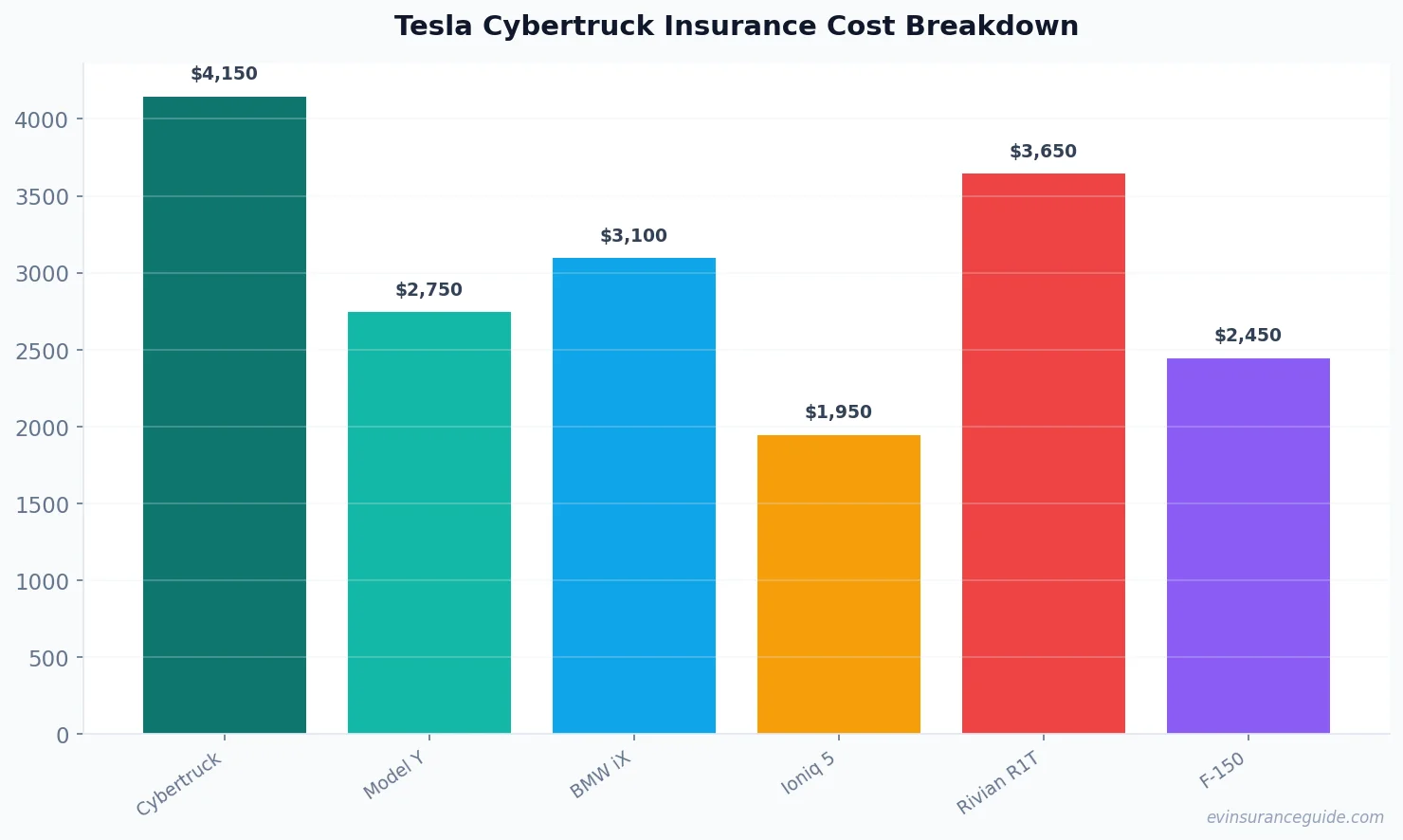
Compare it to a Hyundai Ioniq 5 and the difference grows. The Ioniq 5 averages $1,950 a year for full coverage. The BMW iX sits around $3,100. Rivian R1T owners report $3,650. The Cybertruck leads the pack at $4,150 and the gap comes down to parts scarcity and bodywork complexity rather than the EV powertrain itself.
Why is EV insurance so expensive for this model specifically? Because carriers treat the Cybertruck like a prototype for now. Once more body shops gain Tesla certification the rates should ease, but that timeline stretches into 2026 at least.
OK So Here's the Deal With Coverage Choices Most Cybertruck owners pick the full package: liability, collision, comprehensive, and gap coverage since depreciation hits hard in year one. Gap adds about $180 annually but saves headaches if the truck totals early.
Some skip comprehensive to save $400. That choice backfires in hail-heavy states where the stainless body still dents. One client in Colorado learned that lesson after a storm and ended up paying $3,200 out of pocket.
Roadside assistance comes standard with Tesla insurance in some states but costs extra elsewhere. Factor in the $120 yearly add-on because tow trucks rated for 7,000-plus pounds are not everywhere.
Pro tip: Call two local body shops that already work on Teslas before you sign the policy. Their wait times and labor rates directly affect what the carrier will charge you next renewal.
Honest take on whether the Cybertruck insurance price is worth it The numbers sting. Yet owners who keep the truck three years or more usually see rates drop 15 to 20 percent once claims data improves. Short-term lessees get hammered and should budget accordingly.
Why is EV insurance so expensive right now boils down to risk math, not some conspiracy. The Cybertruck simply sits at the extreme end of that math until the market catches up.
What is the cheapest insurance company for a Cybertruck? Tesla Insurance undercuts everyone in California and a few other states by $800 to $1,200 when you keep a high safety score. Outside those states Geico and Progressive trade blows depending on the month and driver record.
Does raising my deductible save much money? Moving from $500 to $1,000 usually cuts the premium by 12 to 18 percent. On a $4,150 policy that equals roughly $600 back in your pocket each year.
Will rates drop once more Cybertrucks hit the road? History with the Model 3 shows yes. Early Model 3 policies averaged 35 percent above Model S until repair networks expanded. Expect similar movement here over the next two model years.
Is Tesla Insurance available for the Cybertruck yet? Only in select states right now. Where it exists it requires the vehicle to stay inside the Tesla app ecosystem and maintain a strong safety score.
How does Cybertruck insurance compare to a Rivian R1T? The Rivian averages about $500 less per year. Both trucks share high parts costs but Rivian has slightly better parts availability in more regions today.
Should I add gap coverage on a financed Cybertruck? Yes if you put less than 20 percent down. The truck depreciates faster than traditional trucks in the first 18 months and gap prevents you from owing more than the payout.
Drive safe out there. — Alex